From Biodata to Big Data: Can We Really Optimize Love?
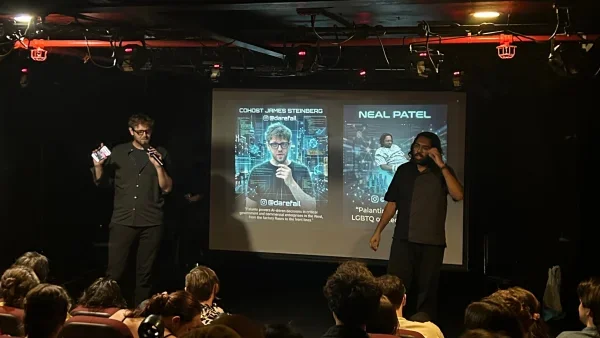
Co-hosts James Steinberg and Neal Patel host a dating event using Palantir-style “big data” to make matches. Photo: Sam Yellowhorse Kesler/NPR
Give a South Asian family a name, a hometown, and one mutual connection, and there’s a decent chance someone will remember whose cousin went to school with that person’s brother.
Long before dating apps, we had networks. We had introductions. We had biodatas that attempted to summarize an entire marriage prospect in a few neatly organized categories.
So when I read about a New York City dating event promising to use data analysis to help singles find love, my first thought was: our community is going to have some opinions about this.
My second thought was more serious. How much information do we actually need before we feel comfortable giving someone a chance?
A Dating Event Where Data Took the Stage
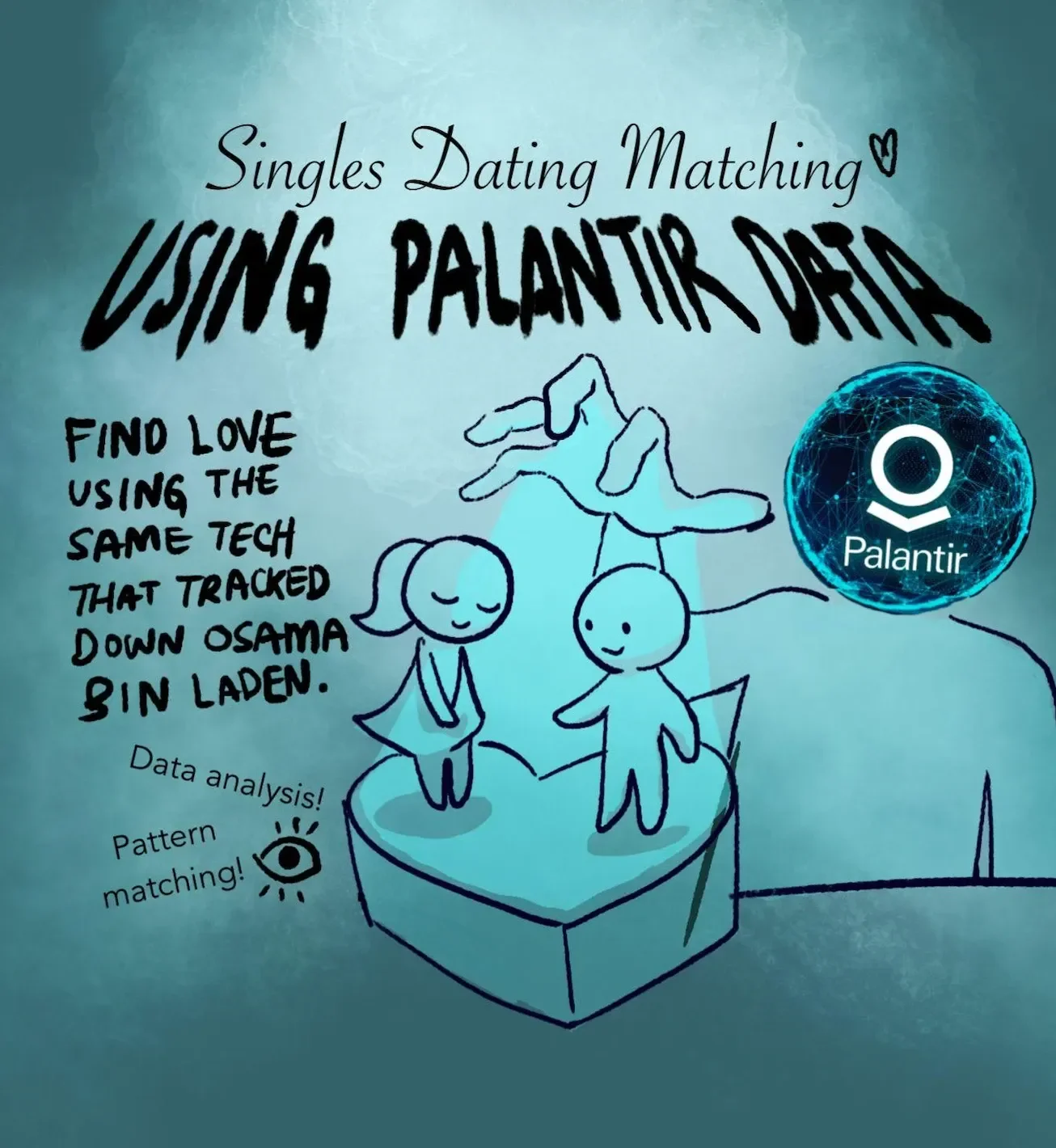
“Singles Dating Matching Using Palantir Data” Event Flyer. Image: https://pools.events/
NPR’s Planet Money recently explored a singles event called “Singles Dating Matching Using Palantir Data.” Despite its name, this was an independent, satirical event organized by James Steinberg. Palantir did not endorse it, and its software wasn’t being used. Comedian Neal Patel served as a co-host, calling potential matches onto the stage.
The evening combined researched dating profiles, comedy, and opportunities to mingle. It also offered an unexpectedly useful starting point for a conversation about South Asian dating: what can information tell us about a potential partner, and what can we learn only by getting to know them?
What a Biodata Can—and Cannot—Tell You
For me, that question reaches far beyond technology. Many of us understand the appeal of a match who looks right on paper. A compatible life stage. Similar goals. A workable location. Familiar traditions. Families who might get along. These things deserve consideration. Marriage involves everyday decisions about money, caregiving, faith, children, and where to build a life. Wanting alignment is sensible. The trouble begins when we expect those facts to answer questions they were never equipped to answer.
A degree tells you someone completed a course of study. You still have to discover whether they’re curious about your perspective. A shared cultural background can give you common reference points. You still have to talk about how each of you wants to practice that culture at home. Even “family-oriented,” a phrase that sounds wonderfully reassuring, needs a conversation. Does it mean Sunday dinners? Supporting aging parents? Living together? Consulting relatives about major decisions? Two people can value family deeply and have very different expectations of married life.
That is why I see a profile as the beginning of an introduction. It gives us somewhere to start.
More Information Doesn’t Always Mean More Understanding
The NPR story offers a particularly memorable example of what happens when we put too much confidence in a file. One participant, Jeannie, was presented with information about work she hadn’t done and photographs of people who weren’t her. She had already explained that someone else shared her name, job, and city. The assembled profile had failed to identify her correctly.
There’s a lesson here even for those of us who will never attend a technology-themed dating show. We can build a remarkably confident opinion of someone from remarkably incomplete information. An old photograph. A LinkedIn profile. A relative’s recollection. A text message interpreted by three friends. Before you know it, you have a whole theory about a person you haven’t spent an hour with.

An introduction opens the door. Conversation helps you discover what comes next. AI-generated illustrative image.
Thoughtful screening has a place in dating. But knowing facts about someone and understanding them are different achievements. Understanding requires questions, context, and the willingness to revise your first impression.
Being Interested Doesn’t Entitle Us to Everything
The episode also raises a more uncomfortable issue. Another attendee, Zach, was startled by photographs and details the organizer uncovered, including images he hadn’t known existed. Some of the information was accurate, but being confronted with it still felt unsettling.
For our community, that invites a conversation about boundaries as well as technology. A family member may genuinely want to help by asking around. A friend may believe they’re protecting you by investigating a potential date. Good intentions still need to leave room for privacy and choice.
An introduction works best when people understand what is being shared and have a say in how they’re presented. Being interested in someone does not entitle us to every detail of their life before they’re ready to share it. And collecting more information cannot remove every uncertainty from dating.
The Search for a Match—and for Certainty
I think that’s the emotional heart of this story. The promise of a better match can be very appealing when what you really want is reassurance that you won’t get hurt, disappoint your family, or spend another six months pursuing something that goes nowhere. Those concerns are understandable. They can also keep you searching for a level of certainty that no biodata, algorithm, or matchmaker can provide.
At some point, another conversation has to do the work that another search cannot. Can this person listen when your experience differs from theirs? Do they follow through? Can you express a preference without feeling difficult? When there’s a misunderstanding, do they try to understand it with you? You learn these things through interaction and patterns over time.
Was the Real Spark the Introduction?

A profile gives you a starting point. A conversation gives you a chance to discover the person behind it. AI-generated illustrative image.
Which brings me to my favorite question from the event: did the data create the opportunity, or did having an introduction help people approach each other?
Zach later told NPR he had arranged a date. He felt that having his background presented onstage made it easier for interested people to approach him afterward. The organizer reported that four dates resulted from the evening. That’s an encouraging outcome, although it doesn’t establish whether the matching methods predicted compatibility.
My interpretation is that the human part deserves attention: someone helped start the conversation, and people had a reason to engage. There is something familiar and valuable in that. At their best, introductions through family, friends, and community offer context and encouragement. Someone says, “I thought you two might enjoy meeting,” and makes that first step a little easier.
We can preserve that generosity while giving the people being introduced ownership of what happens next. They get to decide whether there’s interest, how quickly to move, and whether to continue.
Three Ways to Bring This Into Your Dating Life
If this story makes you reconsider your own dating approach, here is where I would start.
1. Ask what your preferences actually mean
Choose three items on your partner checklist and ask what each represents. If you want someone ambitious, what does ambition look like in everyday life? If you want someone who shares your culture, which traditions matter most to you? Turn those preferences into questions you can actually discuss.
2. Separate facts from assumptions
Next, notice when you’re filling in the blanks. If a profile leaves you wondering about someone’s lifestyle or values, identify what you know and what you’re assuming. Where there’s basic alignment and no concerning behavior, a conversation may be more useful than another round of speculation.
3. Make the next conversation your goal
Finally, give yourself a manageable goal when meeting people. You don’t have to identify your future spouse at the first mixer. You can aim to have a few thoughtful conversations and notice whom you’d like to speak with again. Afterward, ask yourself: Was I curious about them? Did they show curiosity about me? Did I feel respected? Is there enough interest for another conversation?
Those answers give you a next step. You can build from there.
Give Connection a Chance in New York

As we get ready for Single to Shaadi’s Fifth annual Signature Weekend in New York City, September 11–13, this is the mindset I hope people bring with them: clear intentions, a little courage, and room to be surprised.
You can take finding a partner seriously and still enjoy meeting someone. You can value your family’s wisdom while forming your own opinion. You can arrive knowing what matters to you without deciding in advance exactly who will embody it.
If you’re ready to put that into practice, explore our upcoming events and join us in NYC.
A biodata can help make an introduction. A thoughtful matchmaker can help you see a possibility. What happens next begins with two people being willing to get to know each other.