
Hidden Love, Real Desire: Why Heated Rivalry Hits So Close to Home
Heated Rivalry Poster
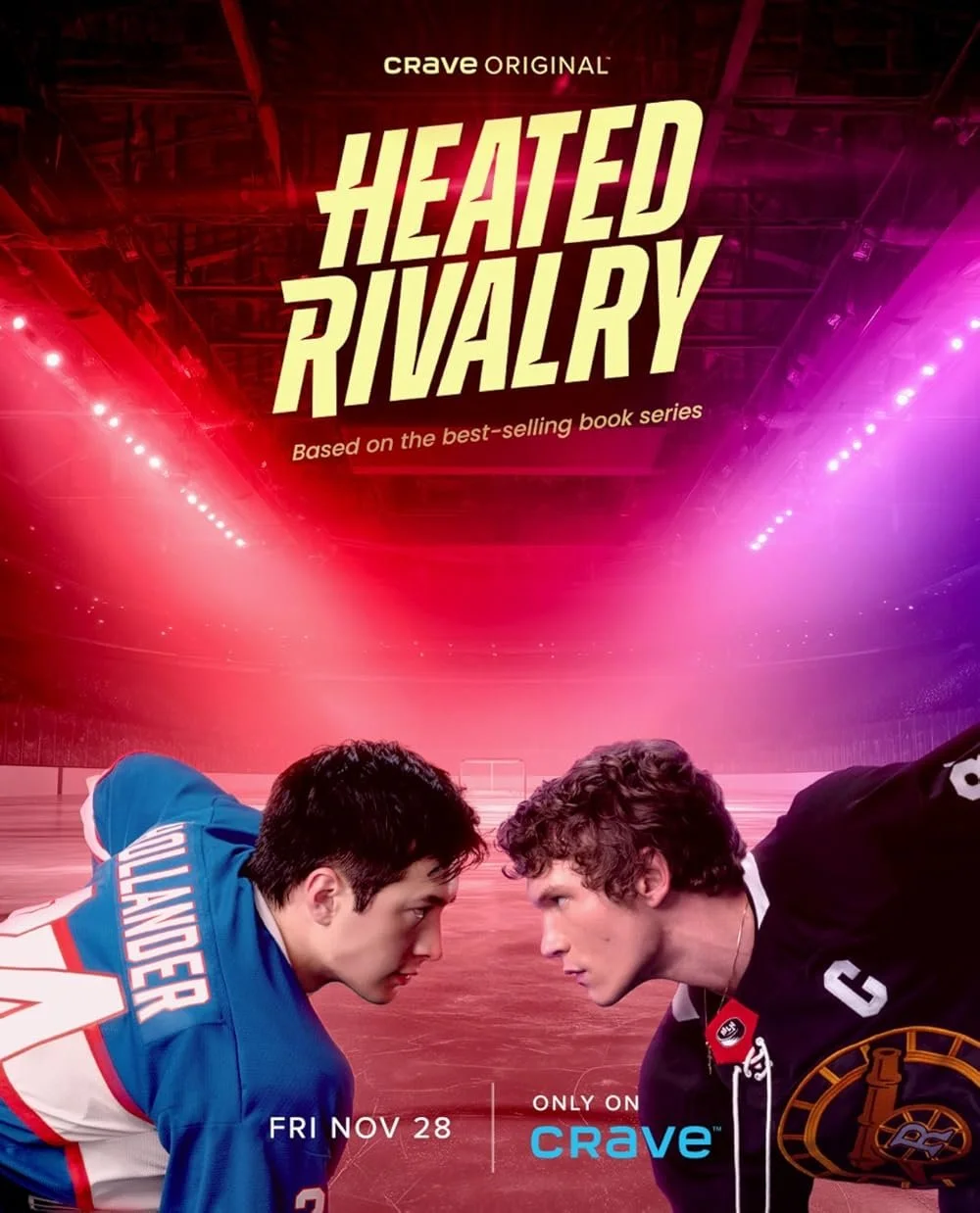
At first glance, Heated Rivalry might look like a sports romance meant for a niche audience. Two rival hockey players. Intense chemistry. A secret relationship. But what makes this story linger isn’t the rivalry or even the sex — it’s the emotional reality underneath it all. For many South Asian singles, this story feels uncomfortably familiar.
Being Gay — and the Cost of Visibility
At its core, Heated Rivalry is about being gay in a system that profits from silence. Shane and Ilya aren’t just afraid of public backlash — they’re afraid of losing everything they’ve worked for. Their careers, reputations, and sense of belonging all feel conditional.
For South Asian singles, queerness isn’t the only identity that triggers this fear. Loving differently, choosing your own partner, or prioritizing emotional fulfillment over optics can feel just as threatening. The takeaway here isn’t about sexuality alone — it’s about how often love is treated as a liability instead of a source of strength.
Ask yourself: Where in your life are you editing yourself to stay acceptable?
Hiding Your Love Isn’t Neutral — It Shapes the Relationship
One of the most honest truths the show reveals is this: secrecy changes love. Even when the connection is real. Even when the desire is mutual.
Shane and Ilya are fully present physically, but emotionally restrained. Their love exists in stolen moments and locked rooms. Over time, that kind of hiding doesn’t just protect you — it limits you. I see this constantly with South Asian singles who are “dating seriously” but can’t move forward because the relationship isn’t allowed daylight.
Actionable insight: If your relationship can’t grow publicly, ask whether it’s actually growing at all.
The Paige Bueckers & Azzi Fudd Parallel — From Silence to Visibility

Fudd & Bueckers at UConn | UConn women's basketball/Instagram
The comparison many viewers draw between Heated Rivalry and Paige Bueckers and Azzi Fudd is both intentional and illuminating. For years, the two star basketball players — teammates, close friends, and eventually partners — moved carefully within the public eye while playing at the highest collegiate level. Their bond was visible to those paying attention, but never explicitly claimed during their early careers, when brand deals, media narratives, and institutional expectations left little room for personal truth.
Only later, once they had more autonomy and security, were Paige and Azzi able to be open about their relationship — and the shift was palpable. What was once guarded could finally be celebrated. Not because the love changed, but because the conditions around them did.
That arc mirrors what we see in Heated Rivalry — and what many South Asian singles experience firsthand. Institutions often reward silence before they reward authenticity. Whether it’s elite athletics, professional environments, or deeply traditional families, the message is subtle but clear: be excellent first, be honest later.
The beauty — and the hope — lies in the fact that openness eventually became possible for Paige and Azzi. Their visibility now isn’t loud or performative; it’s calm, grounded, and earned. A reminder that love doesn’t need to be rushed into the light — but it does deserve daylight eventually.
For South Asian singles, the question becomes:
Are you hiding because you’re not ready yet — or because you’ve been taught that love must always come second to approval?
Why Women Are the Primary Audience — and Why That’s Not an Accident
The show resonates most strongly with women — and that’s very much by design. Heated Rivalry is based on the Game Changers novels written by Rachel Reid, a woman who understands, deeply, what many women are craving from relationships but rarely experience consistently in real life.
Through her male characters, Reid injects qualities women long for: emotional attunement, yearning, vulnerability, accountability, and a desire for connection that goes beyond surface-level attraction. Shane and Ilya struggle. They miscommunicate. They avoid feelings — and then are forced to confront them. That emotional realism feels refreshing because it’s so often missing from dating narratives women are offered.
Women aren’t watching this story because it’s provocative or taboo. They’re watching because it models men who want intimacy, who wrestle with their emotions instead of outsourcing that labor, and who are capable of growth. For South Asian women especially — many of whom have been socialized to overgive, overaccommodate, or accept emotional distance as “normal” — this kind of portrayal hits a nerve.
Because Heated Rivalry began as a book series, the emotional architecture was already solid. The adaptation works because it doesn’t dilute the longing or sanitize the tension. Instead, it allows silence, glances, frustration, and desire to sit uncomfortably — just like real relationships do.
For South Asians raised on implication rather than conversation, seeing intimacy portrayed honestly (not euphemistically) can feel jarring — and liberating.
Reflection: Are you drawn to this story simply because it’s compelling — or because it shows the emotional depth you’ve been told not to expect, or not to ask for, in your own relationships?
Asian Representation That Isn’t the “Story”
Shane being portrayed by an Asian-Canadian actor matters — not because the show makes it a plot point, but because it doesn’t. He isn’t exoticized, explained, or reduced. He’s allowed to be complex, desirable, flawed, and emotionally conflicted.
That kind of representation is powerful for South Asian singles who often feel they must overperform or assimilate to be chosen.
Actionable reminder: You don’t need to dilute your identity to be worthy of love.
Sex Isn’t the Radical Part — Honesty Is
Yes, the show is explicit. But the sex isn’t the rebellion. The honesty is. Shane and Ilya are far more comfortable being physically vulnerable than emotionally honest about what they want long-term.
This mirrors what I see in our community all the time: silence around sex doesn’t create values — it creates confusion and shame. Whether you’re abstinent, exploring, or partnered, clarity matters more than secrecy.
Reframe this: Intimacy doesn’t destroy tradition. Avoidance does.
The Real Question Heated Rivalry Asks
Ultimately, this story forces a question many South Asian singles avoid: How long are you willing to postpone your happiness to remain acceptable?
As the year comes to a close, this isn’t about dramatic rebellion. It’s about honesty — with yourself first. Love doesn’t require perfection, but it does require courage.
And love that can’t be acknowledged eventually asks for a price.