
The Great Romance Slump: Are We Actually Dating to Find Love—or Just Staying Busy Being Single?
For the past several months, I’ve been talking a lot about our 5th Annual Single to Shaadi Signature Weekend in New York City.
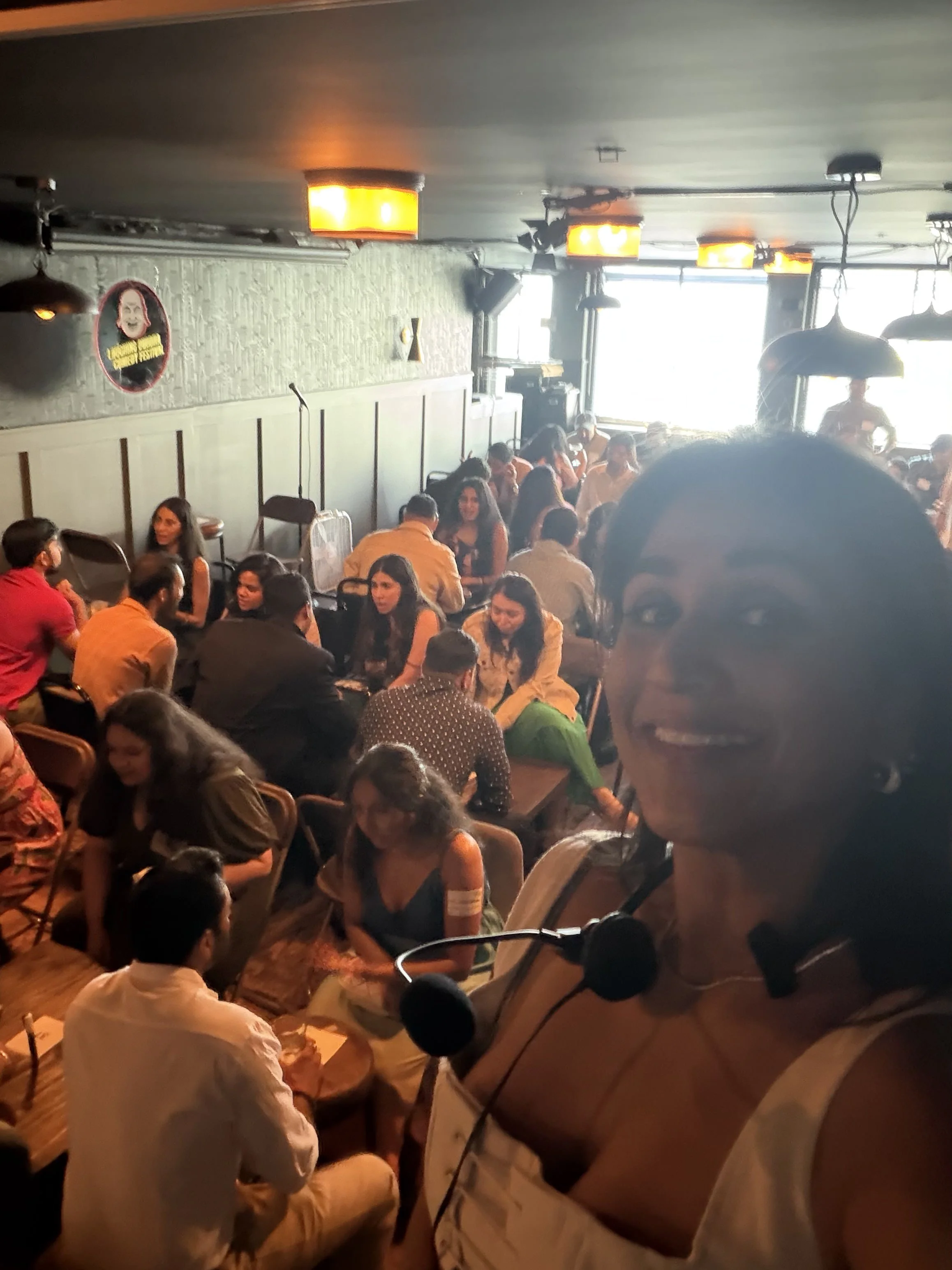
More ways to meet than ever—but are singles actually slowing down long enough to connect? Photo: Single to Shaadi
We promoted it, planned it, filled rooms with South Asian singles, created opportunities for people to meet face-to-face, and spent an entire weekend doing what so many singles say they wish dating gave them more of: real-life connection.
And now that the weekend is behind us, I want to close that chapter with something I noticed.
Because right around the same time, I read The Atlantic’s recent article, “The Great Romance Slump,” which asks a much bigger question: if there are more dating apps, singles events, matchmaking services, coaches, retreats, and ways to meet people than ever before, why are fewer people actually finding relationships?
The numbers are sobering. The share of 25-to-34-year-olds in marriages or cohabiting partnerships has fallen significantly over the past several decades. In one 2025 YouGov poll cited by The Atlantic, 69 percent of single respondents said they rarely or never go on dates. And yet, most young singles still say they want long-term partnership.
That contradiction stayed with me. Because after spending an entire weekend watching hundreds of South Asian singles interact in person, I started wondering whether we really have a shortage of opportunities. Or whether we have a shortage of something else.
Curiosity. Patience. Vulnerability. Willingness to choose.
Maybe the romance recession is not just happening because dating apps are bad, men and women misunderstand each other, or everyone is too busy. Maybe some of us have become so good at protecting ourselves from the wrong person that we are also protecting ourselves from the possibility of actually connecting with someone.
And I saw three versions of that play out over Signature Weekend.
We Are Screening People Before We Are Meeting Them
Speed dating is supposed to be simple. You sit down with someone for a few minutes. You talk. You see how the conversation feels. Then you move on.
Of course, everyone has dealbreakers.
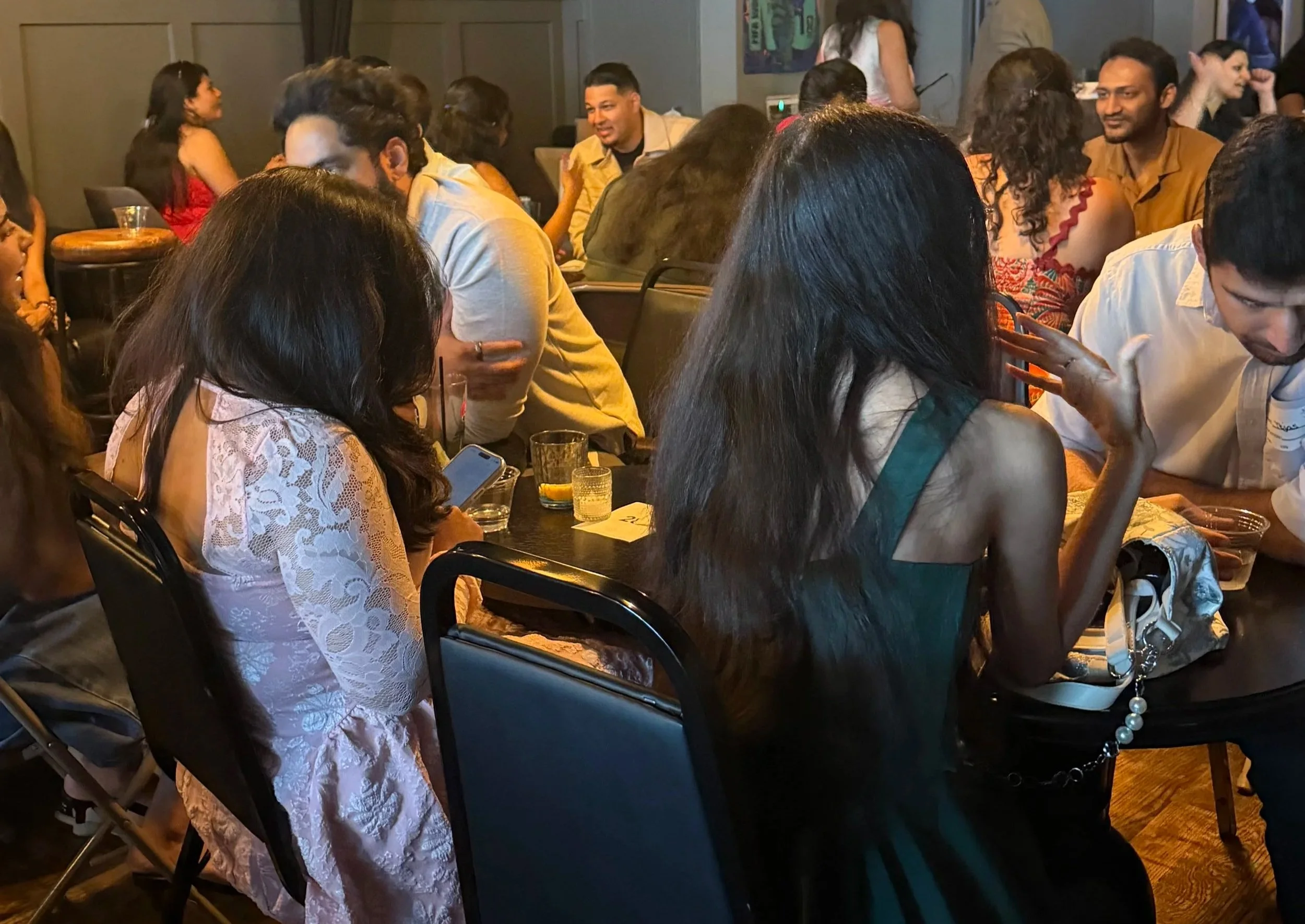
Speed dating creates the opportunity. What happens once two people sit across from each other is up to them. Photo: Single to Shaadi
Location matters.
Religion may matter.
Diet can matter.
Whether someone wants children matters.
Culture and ethnicity may matter.
Those are perfectly legitimate things to ask. But during some of our speed-dating rounds, I watched people ask their pre-qualifying questions almost immediately:
Where do you live?
What is your ethnicity?
Are you vegetarian?
Would you relocate?
And when the answer did not match their checklist, they were done. Not politely done. Emotionally done. They would sit through the rest of the round barely engaging with the person across from them.
And every time I saw it, I thought: you may have decided this person is not your romantic match, but you are still sitting across from another human being.
Talk to them.

You may know within minutes that someone isn’t your match. You can still leave them—and everyone watching—with a positive impression. Photo: Single to Shaadi
Be kind.
Ask a question.
Laugh.
Learn something.
Because here is the part people forget at singles events: Everyone else is watching how you treat people you are not interested in.
If you become cold the second someone fails your checklist, you are not just rejecting that person. You are broadcasting something about yourself to the entire room. You are telling other singles:
“If I decide you cannot give me what I want, you are no longer worth my attention.”
And then twenty minutes later, that same person walks into the mixer wondering why nobody approaches them.
This is why I tell singles that dating is not simply about evaluating other people. You are constantly being evaluated too. Warmth is attractive. Social grace is attractive. The ability to have a pleasant conversation with someone you are not going to marry is attractive. And frankly, kindness should not depend on romantic potential.
One of the strongest lessons I took away from the weekend was this: How you treat the wrong match can influence whether the right match wants to approach you.
We Have Turned Dating Into a Pre-Screening Exercise
This behavior did not come out of nowhere. Modern dating has trained us to operate this way. Before we meet someone, we often already know their age, career, height, education, location, religion, political affiliation, hobbies, and probably where they went on vacation last summer.
We can look at LinkedIn.
Instagram.
Mutual friends.
Google.
Their dating profile.
Sometimes we know more about someone before meeting them than our grandparents knew about each other before getting married. And yet all that information has not necessarily made us better at connection.
The Atlantic describes a dating culture overflowing with possibility: countless apps, niche dating platforms, matchmaking services, singles events, and even expensive retreats designed specifically to help people form relationships. And yet the author repeatedly encounters the same outcome — enormous apparent abundance that somehow evaporates into very few actual relationships.
That is the paradox. We have more information. More choices. More screening tools. But perhaps less openness.
There is a difference between asking: “Is this person fundamentally compatible with me?” and asking: “Can I find one reason to eliminate them?”
A lot of dating today feels like the second one. And the problem is that if your goal is elimination, you will always succeed.
Chemistry Can Feel Like Commitment When It Isn’t
The second thing I noticed during the weekend was almost the opposite problem.
Some people did connect. Strongly. There were connections that began Friday night and continued throughout the weekend. They sought each other out. They spent time together. They flirted. They talked. From the outside, you could see something developing. And then the weekend ended.
And in at least one situation, one person decided there was not enough potential to continue pursuing the connection.
The woman on the receiving end felt hurt. Her feeling was essentially: “Then what was this entire weekend?” She felt used. And I understand why.
When someone gives you concentrated attention over several days, it can feel like something substantial is forming. But this is another modern dating trap: Intensity can feel like intention. They are not the same thing.

A weekend can create instant momentum. But chemistry in the moment and intention after the weekend are not the same thing. Photo: SIngle to Shaadi
A destination wedding can create it. A vacation can create it. A conference can create it. A dating weekend certainly can.
You are in a little bubble. Everyone is dressed up. There is music. There are events. You keep seeing the same person. Maybe you spend Friday night together, then Saturday afternoon, then find each other again Saturday night. It feels like momentum.
But Monday morning eventually arrives. And then the question becomes: Were we building something, or were we enjoying something? Both are valid. But they are not the same.
The lesson is not that people should avoid chemistry or keep their guard up. Quite the opposite. Enjoy it. Flirt. Be present. Let yourself get excited. But do not build an entire future out of 48 hours of proximity.
And if you are the person who is unsure, recognize that your behavior communicates something too. If you spend an entire weekend behaving as though you are exclusively interested in someone, they may reasonably interpret that as intention.
Clarity is kind. You do not need to say, “I want to marry you.” But you can say:
“I’m really enjoying getting to know you. I’d like to keep talking after the weekend and see where this goes.”
Or:
“I’m having such a good time with you, but I also want us both to enjoy the weekend and meet people.”
Neither statement kills the romance. It simply prevents two people from walking away with completely different interpretations of what happened.
We May Be Maximizing Options Instead of Building Connections
The third thing I noticed may be the one that says the most about modern dating. Our Signature Weekend was not the only South Asian singles event happening in New York. There were several. And some singles were bouncing between them.
Come to our event. Leave. Go to another event. Maybe return later. Go somewhere else the next night.
The strategy was obvious: Meet as many people as possible. And from a purely mathematical standpoint, I understand it. More people equals more possibilities. Right?
Except human connection is not a casino. You cannot simply increase the number of spins until love appears. At some point, there is a trade-off between breadth and depth. If you spend your entire weekend wondering which event has the better crowd, whether another room has more attractive singles, or whether the next party might have someone even more compatible, you may never stay anywhere long enough to let someone become interesting.
This is dating-app behavior transported into real life.
Swipe.
Swipe.
Swipe.
Now we are just physically walking between rooms instead. And this may be one of the biggest reasons we are experiencing a romance slump. We have confused access to more people with progress toward partnership. They are not the same.

More rooms, more events and more people do not automatically create deeper connection. Photo: ChatGPT
You can meet 100 people over a weekend and genuinely connect with no one. You can also meet one person, stay curious, have three conversations, and walk away with something worth exploring.
The number of options is not the metric that matters. The quality of your attention is.
Are We Dating to Find Someone—or Dating to Stay in the Search?
This is where The Atlantic’s piece and what I saw during Signature Weekend intersect. The article describes singles who are tired.
Tired of apps.
Tired of rejection.
Tired of bad dates.
Tired of ambiguity.
Tired of putting in effort without knowing whether it will lead anywhere.
I have tremendous empathy for that. Dating can be exhausting. But exhaustion can also change how we behave.
We start protecting our energy. We screen faster. We become skeptical sooner. We tell ourselves we are being discerning.
Sometimes we are. But sometimes we are simply becoming less willing to be uncomfortable. And relationships require discomfort.
You have to risk talking to someone you may not like. You have to risk liking someone who may not choose you. You have to risk continuing with someone before you know exactly how it ends. You have to tolerate uncertainty. That is the part modern dating technology cannot eliminate.
And I wonder if some of the “romance recession” comes down to this: We have become very sophisticated at avoiding relational risk. Unfortunately, love is relational risk.
The South Asian Dating Contradiction
For South Asian singles, there is an additional contradiction. Our culture still places enormous value on marriage. People ask when you are settling down. Parents worry. Relatives make introductions. There is a very clear cultural message: Choose someone. Build a life. Create a family.
But the broader dating culture sends the opposite message: Do not settle. Keep your options open. There may be someone better. Protect your peace. Never chase. Never be too available. Leave at the first sign of a red flag.
So South Asian singles are caught in the middle. They are being pressured to commit while living inside a culture that trains them not to choose.
No wonder everyone is exhausted. And no wonder singles can spend years feeling like they are working very hard at dating without actually getting closer to partnership.
The answer is not lowering your standards. I want to be very clear about that. It is not marrying someone incompatible. It is not tolerating bad behavior. It is not ignoring genuine dealbreakers. The answer is learning the difference between standards and defenses.
A standard says: “I need someone who wants children.”
A defense says: “They live 90 minutes away, so there is no point having the rest of this conversation.”
A standard says: “My religious practice is central to the home I want to create.”
A defense says: “They did not answer the religion question exactly how I expected, so I am emotionally checking out.”
A standard says: “I want someone who demonstrates consistency.”
A defense says: “I like them, but I should probably keep searching just in case someone better appears.”
One protects compatibility. The other protects you from vulnerability.
Stop Treating Dating Like Inventory Management
If I could leave singles with one lesson from our fifth Signature Weekend, it would be this: People are not inventory. Dating is not about processing the maximum number of candidates. You are not trying to inspect every option before making the most statistically optimized choice. You are trying to meet another human being.
That requires something much harder than filtering. Curiosity.
If someone does not meet one criterion, can you still have a pleasant five-minute conversation?
If you have chemistry with someone, can you communicate clearly enough that neither person leaves confused?
If you meet someone promising, can you resist checking the next room to see whether someone “better” is waiting there?
Those sound like small choices. But relationships are built from small choices.
Three Things I Want Singles to Try
The next time you are dating — whether it is speed dating, matchmaking, an app, or a setup — try three things.
First, give someone the whole conversation. If they hit a legitimate dealbreaker, fine. They may not be your match. But finish the conversation graciously. You may learn something. You may make a friend. They may know someone perfect for you. And most importantly, you remain the kind of person others want to meet.
Second, if you feel chemistry, pair it with clarity. Do not assume the other person knows what you mean. If you want to continue after the date or event, say so. If you are uncertain, be warm without creating an illusion of commitment. Chemistry is exciting. Clarity makes it safe.
Third, when you meet someone promising, stop scanning the room for five minutes. Give them your attention. Ask another question. See whether the conversation deepens.
The person you marry may not be the most impressive profile in the room. They may simply be the person you actually took the time to know.
Maybe We Do Not Need More Options
I began Signature Weekend thinking about how to create as many opportunities for connection as possible. And I still believe those opportunities matter. We need spaces where South Asian singles can meet. We need matchmaking. We need introductions. We need events. We need alternatives to sitting at home swiping.
But I ended the weekend thinking about something slightly different. Maybe opportunity is only half the equation. The other half is willingness.

Sometimes progress in dating looks less like meeting more people—and more like giving one person your full attention. Photo: ChatGPT
Willingness to talk. Willingness to stay curious. Willingness to be warm even when someone is not your match. Willingness to risk being disappointed. And eventually, willingness to choose.
Because maybe the answer to the Great Romance Slump is not another dating app. Or another event. Or another thousand profiles. Maybe it starts with what happens once two people are finally sitting across from each other.
Do they look for the fastest way out? Or do they give the possibility in front of them a genuine chance? After five years of hosting this weekend, that is the question I am leaving New York with.
And as we close the chapter on another Signature Weekend and move into the next season of conversations here at Single to Shaadi, it is probably the question I will keep asking: Are we actually dating to find a partner — or have we gotten so comfortable searching that choosing someone has become the scariest part?
Because eventually, finding love requires something no algorithm, matchmaker, or singles event can do for you. You have to stop searching long enough to see who is already standing in front of you.