“A Nice Indian Boy”, A Loving Indian Family: What This Queer Love Story Can Teach All of Us
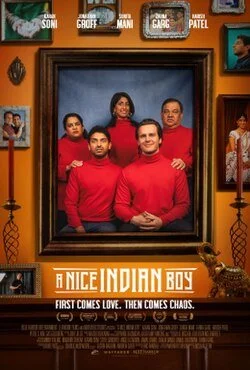
Theatrical release poster
As June draws to a close, I find myself reflecting on something I simply couldn’t let pass without acknowledgment. Pride Month is about more than rainbows and visibility — it’s about honoring the journey, the struggle, and the love stories that too often get pushed to the margins. And in the South Asian community, where family and tradition are central, queer love is still treated as something separate. Or worse, something shameful.
At Single to Shaadi, that has never been our perspective. From day one, we have proudly offered LGBTQ+ matchmaking services. Not as a side offering. Not as a checkbox. But as a core part of what we do — because we believe love, especially South Asian love, comes in many beautiful forms. Our work has always been about helping people find not just a partner, but a meaningful, culturally resonant connection. And for our queer clients, that connection often includes the hope of acceptance — from partners, families, and society.
This year, however, something about the mood during Pride Month felt… off. Maybe it’s the political climate. Maybe it’s the waves of anti-LGBTQ+ legislation or the unspoken fatigue from having to keep defending your right to simply exist. Whatever it is, it didn’t feel right to stay quiet. And so I turned to something that usually helps me process emotions — stories. Specifically, A Nice Indian Boy.
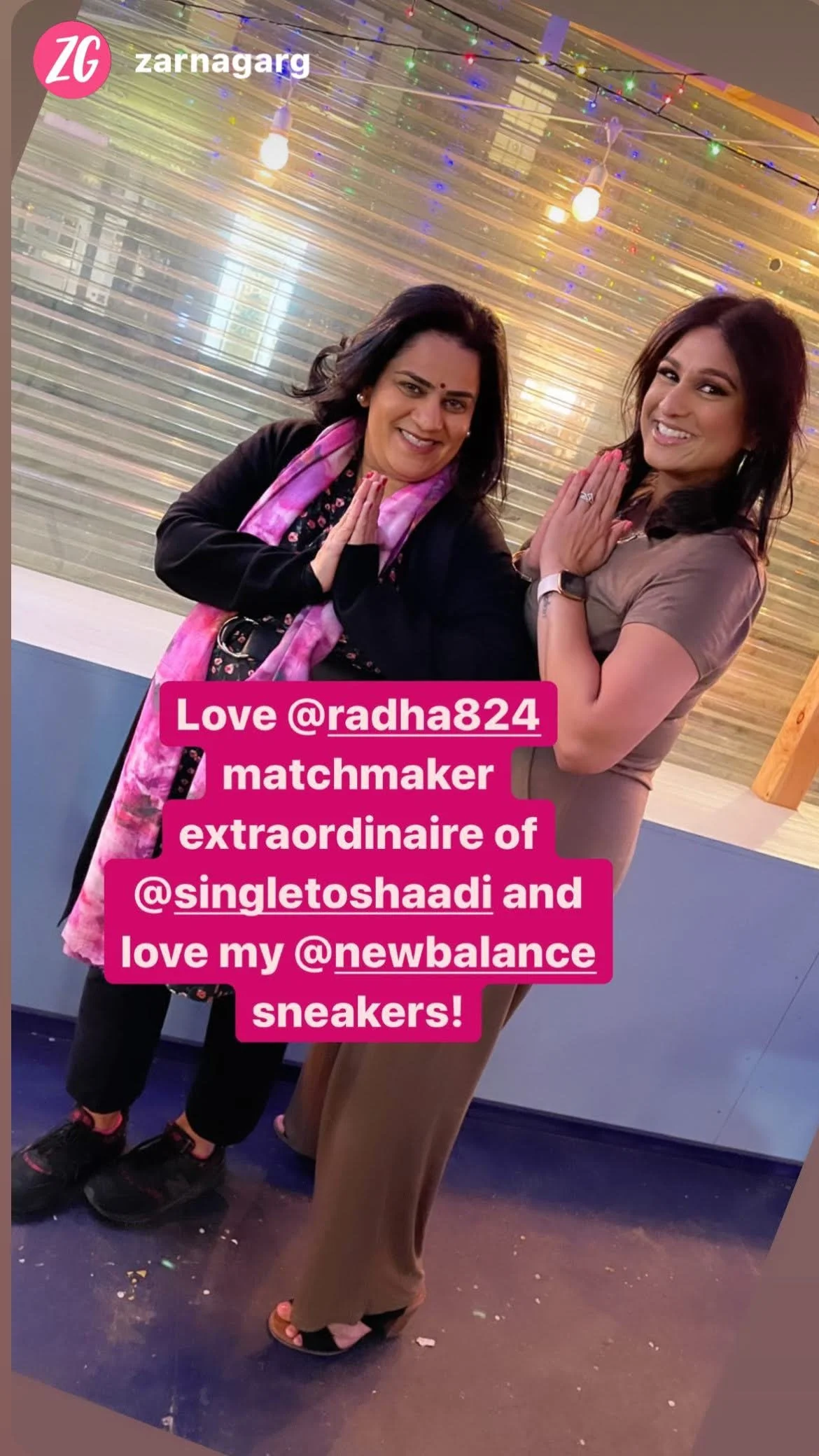
Zarna and Radha at her outdoor show in NYC during Covid (April 2021)
This film, based on a play by Madhuri Shekar, recently made its debut on screen. It stars Zarna Garg — a comedy powerhouse and an early supporter of Single to Shaadi — as the matriarch of a traditional Indian-American family. But the movie isn't really about her. It's about Naveen, a young gay Indian American doctor who wants love. Not just casual love — real love. And yes, he wants the big fat Indian wedding too.
What I love most about this film is that it doesn’t follow the typical “coming out” story arc. We’ve seen that before. What we haven’t seen nearly enough are stories that ask: what happens after? What happens when a Desi gay man is already out, and now has to figure out how to hold his identity, his culture, and his romantic hopes all at once? It’s a rich, complicated, funny, and surprisingly relatable narrative — even if you’re straight.
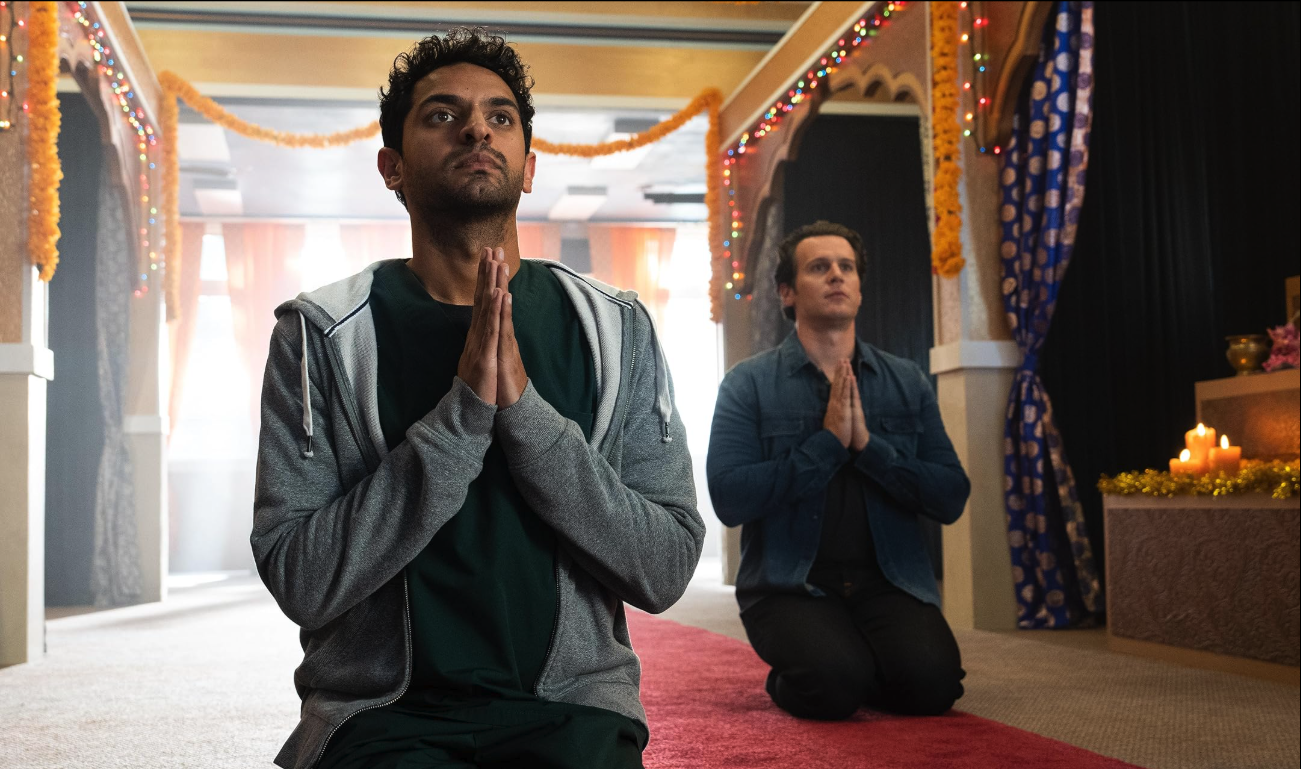
Jonathan Groff and Karan Soni meet at a temple in A Nice Indian Boy
The cultural tropes are familiar and lovingly rendered. Of course, Naveen is a doctor. Of course, the pressure begins the moment his sister gets married. Of course, the family priest is invited to officiate the shaadi. But those tropes serve as familiar entry points into a story that’s doing something more radical: showing that queer Desi people belong in these traditions. Not in spite of who they are — but because of who they are.
One of the most refreshing parts of the movie is that Naveen isn’t running away from his culture or religion. He’s grounded in it. He goes to temple, he wears kurtas, he values rituals. This matters. Because so many queer South Asian stories — especially in the West — are about breaking away from oppressive tradition. This story asks: what if we didn’t have to break away? What if we could evolve the tradition, while honoring its soul?
Zarna Garg, as the mother, is hilariously over-the-top — but with layers. Her character isn’t unsupportive; she’s overcompensating. She throws herself into LGBTQ+ pop culture, trying so hard to be the “cool mom” that it becomes painfully obvious she’s terrified of doing something wrong. Her fear isn’t rooted in hate — it’s rooted in love. And that’s something any Desi parent can relate to.
The film also subtly explores the idea of performative acceptance. The father, more reserved, tries to shut down uncomfortable conversations at dinner by insisting he’s already supportive. But beneath the surface, you see it — the hesitation, the internal reckoning. And yet, none of this is dramatized into rejection or trauma. It’s simply… human. Complicated. In progress.
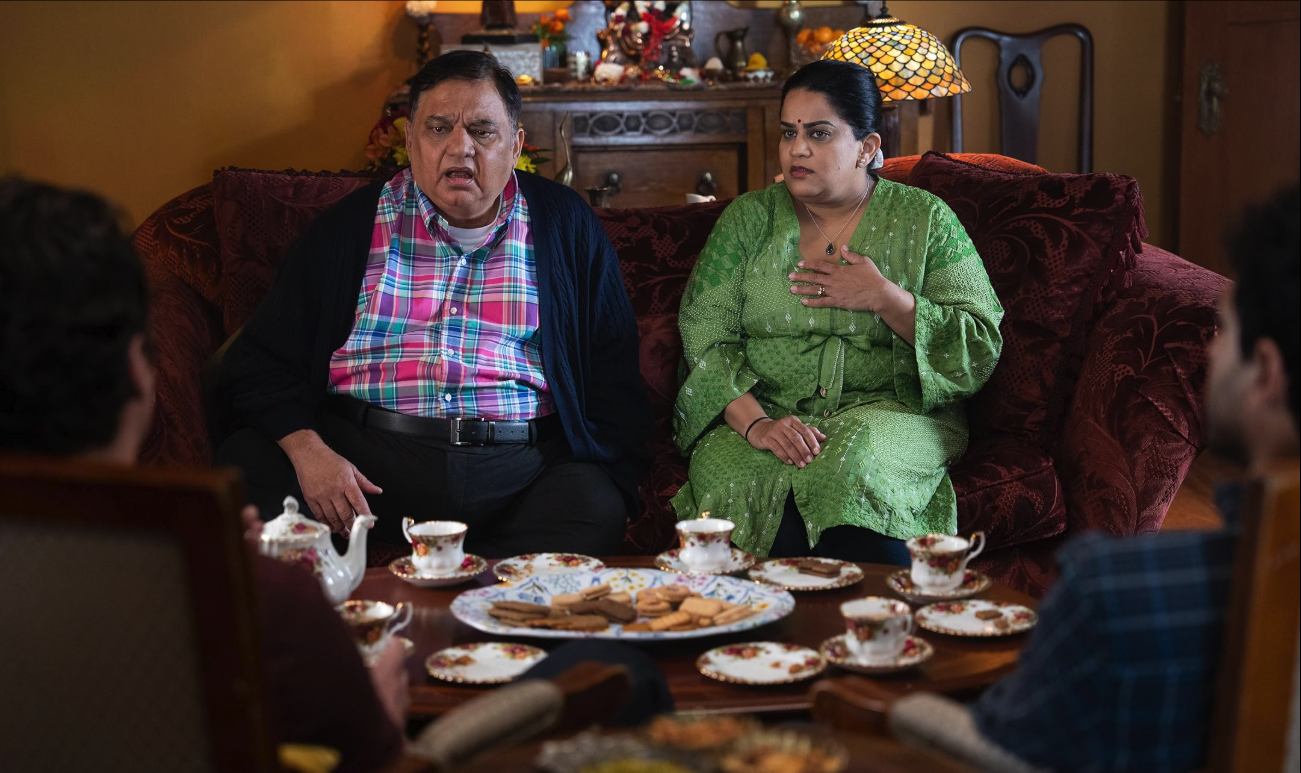
Another strength of the film is that it doesn’t just focus on Naveen’s queerness. It builds out a whole world — his sister’s divorce, his parents’ arranged marriage, the white boyfriend adopted by an Indian family who’s arguably more Indian than Naveen. These layers remind us that identity isn’t one-dimensional. That even in our pursuit of progressive values, we still carry internal biases — like the mother sighing in relief when she assumes Naveen’s partner is Indian, only to be stunned when she realizes he’s white.
The moment that brought tears to my eyes was the wedding scene. Two grooms. One priest. All the rituals. The mehndi, the wedding games, the family dance. They didn’t tone it down. They didn’t Westernize it. They celebrated the shaadi fully. And in doing so, they affirmed what I’ve believed all along — that our culture is expansive enough to hold every kind of love.
There’s a line in the film that stuck with me: “There’s a difference between not wanting something, and being afraid to want it.” That hit me hard. Because I think so many South Asians — queer or not — have internalized the idea that wanting something deeply personal, like love, means stepping out of line. We silence our desires out of fear of disappointing our families or our communities. But as a matchmaker, I see it every day: people do want love. They just need permission — from themselves, from society — to say it out loud.
Another gem of a quote comes from Naveen’s sister, Arundhati: “The easiest thing to believe in is love.” And yet we often make it so complicated. This film reminds us that sometimes, we just need to lean in — to our hearts, our histories, and our humanity.
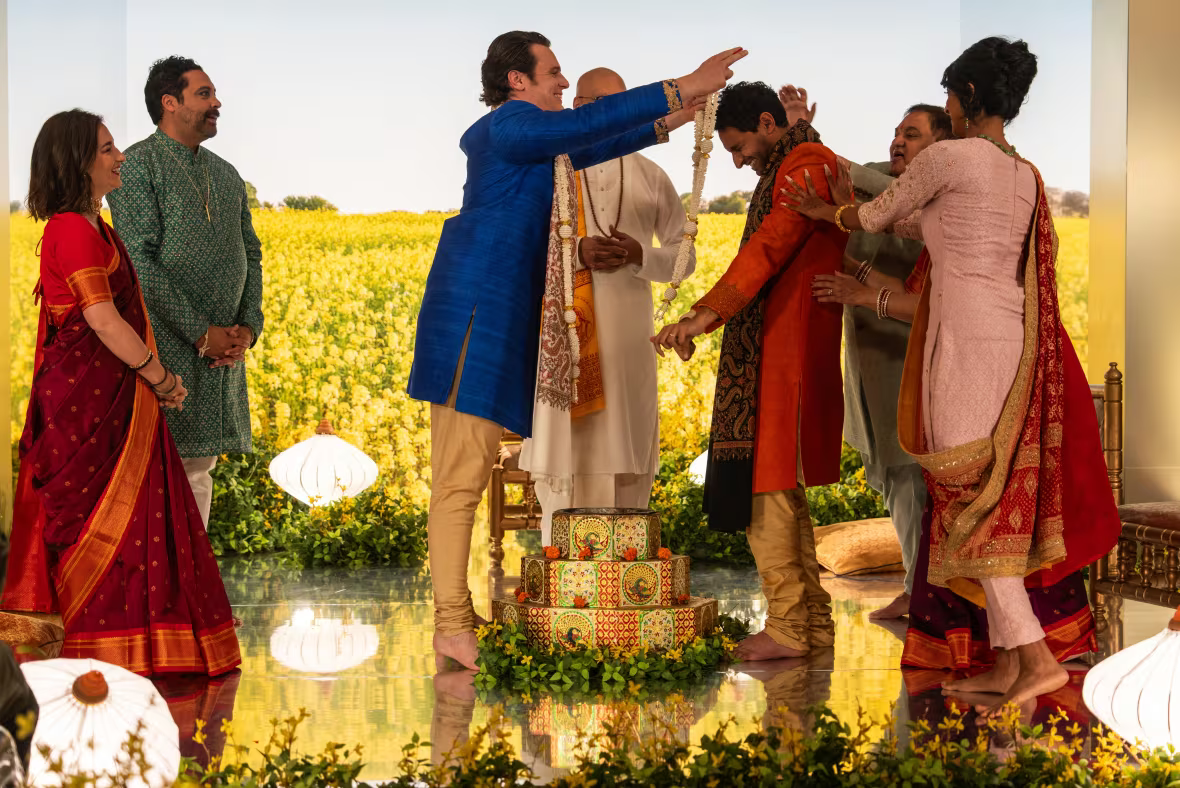
Wedding scene from A Nice Indian Boy featuring Jonathan Groff and Karan Soni. (Levantine Films)
So no, this Pride Month didn’t feel like a celebration. But it did feel like a moment of reflection. A moment to remember that inclusion isn’t about grand gestures — it’s about small affirmations. It’s about telling stories like A Nice Indian Boy and recognizing that queer Desi folks are not separate from our communities. They are our communities.
If you haven’t seen the film yet, I urge you to watch it. Watch it with your family. Watch it with your kids. Watch it not because it’s a “queer film,” but because it’s a human film — rooted in the same values so many of us hold dear: family, faith, and love.
Call to Action:
Have you watched A Nice Indian Boy? What resonated with you? Whether you identify as LGBTQ+, are an ally, or are just trying to be a better family member or friend — I’d love to hear your thoughts in the comments. Let’s keep the conversation going, not just during Pride, but every month of the year.