When Love Becomes a Spectacle: What the Bezos Wedding—and That Viral Wall Street Baraat—Reveal About Performative Marriages
This past weekend, Jeff Bezos and Lauren Sanchez’s Venetian wedding dominated headlines worldwide—and not because it was a touching testament to their love.
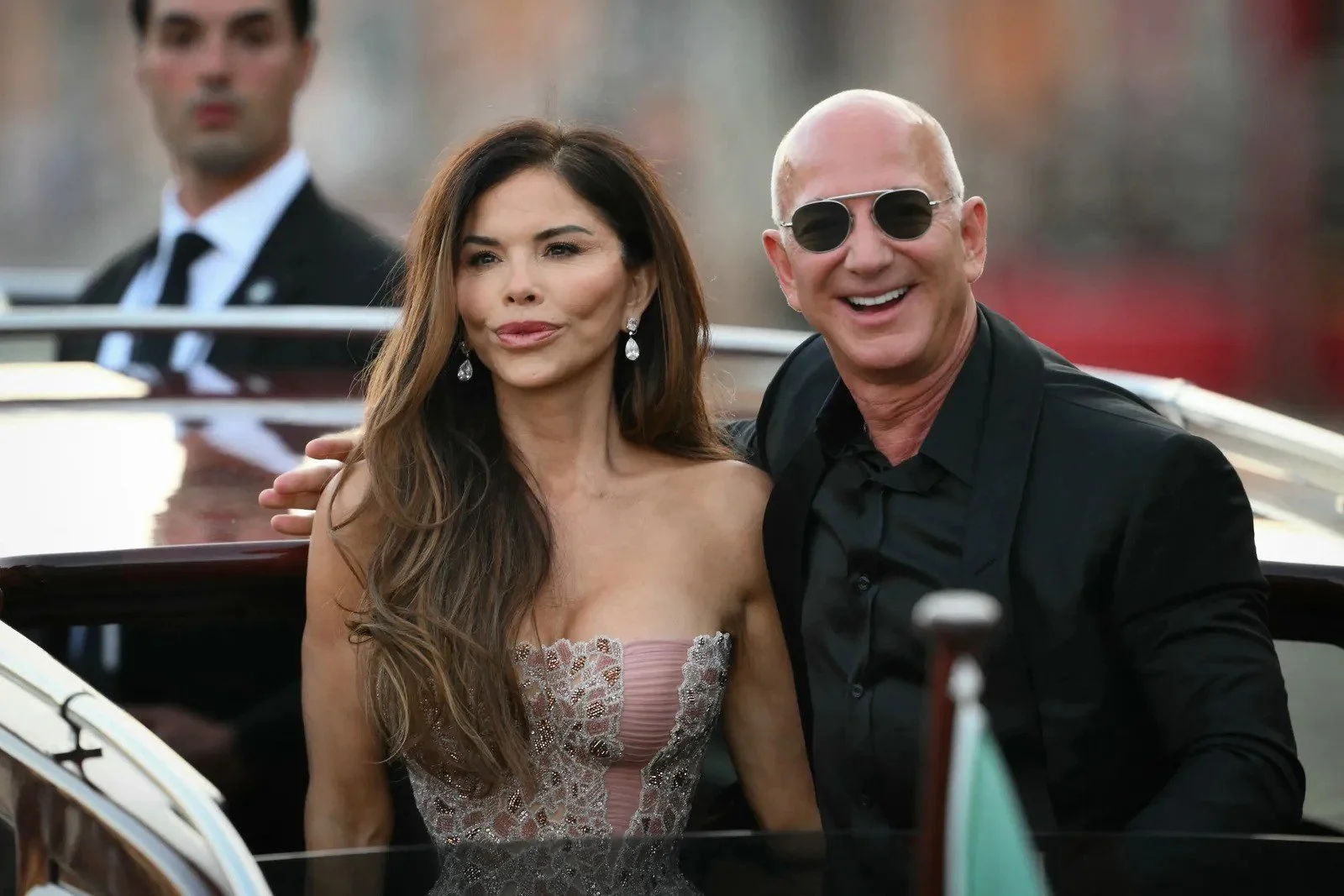
Lauren Sanchez & Jeff Bezos in a gondola for their wedding celebrations in Venice, Italy. MARCO BERTORELLO/Getty Images
From the moment the first photos emerged, the internet was buzzing with skepticism and disdain. Originally planned at the historic Venice Arsenal—a 12th-century naval complex—protests from locals, environmental activists, and cultural preservationists erupted almost immediately. Venetian residents called it an “insult” to their city, frustrated by how billionaires routinely treat their fragile lagoon as a playground for ego. Amid the backlash, the wedding was abruptly relocated to the smaller Aman Venice hotel. But even that couldn’t quell the controversy.
Despite the venue switch, the event ballooned into a $50 million extravaganza. The guest list was a who’s who of celebrity acquaintances—Bill Gates, Leonardo DiCaprio, Katy Perry, Barbra Streisand. Notably absent were Bezos’s own children, a fact that left many observers questioning how meaningful this ceremony really was to the couple themselves.
Critics described it as “a red carpet masquerading as a wedding,” with attendees flaunting couture and custom-made jewelry. Lauren Sanchez herself wore at least four separate designer gowns over the course of the weekend—each reportedly valued at hundreds of thousands of dollars. Even the logistics bordered on the absurd: fleets of luxury water taxis ferried guests back and forth, drones hovered overhead to film the spectacle, and security teams shut down canals so influencers could get their perfect shots.
One Vanity Fair columnist bluntly called it “gross,” a performance of power rather than an authentic celebration. On Reddit and social media, thousands piled on, calling the wedding tone-deaf given ongoing economic anxiety and environmental crises.
If this sounds like a uniquely billionaire phenomenon, it isn’t.
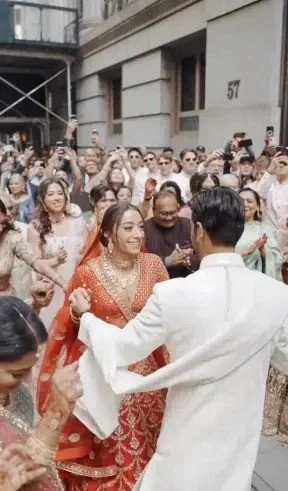
The bride and groom were identified as Varun Navani, CEO of enterprise AI platform Rolai, and Amanda Soll, a director of legal compliance, risk management, per their LinkedIn pages.@trueeventslive/instagram
Just a few weeks earlier, our own Indian American community watched a different wedding ignite debate about performative excess. In late May, a New Jersey couple—who both work in finance—spent nearly $66,000 to shut down Wall Street for their baraat.
For nearly two hours, the financial district ground to a halt as the groom arrived on a white horse escorted by a brass band and a convoy of Rolls Royces. A drone filmed the procession. Dozens of professional photographers and videographers swarmed the streets. The bride’s side reportedly hired event consultants whose sole job was to ensure no uninvited onlookers crossed the barricades into the photos.
Coverage in the New York Post and Desi Reddit communities was scathing. Many wondered: is this really what our culture has become—shutting down a city to prove we “made it”? Some criticized the tone-deafness of spending so lavishly while so many Desi families are grappling with financial pressure, immigration stress, and mental health challenges.
These weddings, as different as they seem, share something in common: the prioritization of spectacle over substance.
A Tradition Lost in Translation
In traditional South Asian cultures, weddings are indeed a big deal—but historically, they were also about hospitality, spiritual rituals, and family bonding. Grand celebrations were never simply about displays of wealth. Even when families invested significantly, they did so in a spirit of community, with rituals meant to honor ancestors, affirm shared values, and create memories rooted in meaning.
Today, globalization and social media have created a dangerous cocktail:
Relentless comparison. Many young couples feel pressure to “keep up” with viral weddings on Instagram and YouTube.
Cultural dilution. The deeper purpose of ceremonies—like the saptapadi (seven steps) or mangalsutra—can get overshadowed by drone shots and celebrity guest lists.
Fleeting validation. An event that took a year and six figures to plan is reduced to a viral clip that trends for 24 hours.
And then what?
As a matchmaker and relationship expert, I see couples who poured everything into a wedding but neglected the conversations that matter:
How will we handle conflict?
What are our financial expectations?
How will we balance our families’ influence with our own boundaries?
What does commitment look like to us after the celebrations end?
Advice for Singles and Couples Planning Their Wedding
If you are dating or newly engaged, you are at a crossroads: will you let your wedding be about authentic commitment, or will it become another performance? Here are some reflections and practical suggestions:
Define your priorities as a couple.
Sit down—just the two of you—and write down what a meaningful wedding looks like. Do you want something rooted in tradition? Something small and intimate? Something sustainable and mindful of the environment?Establish a budget early—and stick to it.
Excessive spending can strain a marriage before it begins. Remember: a wedding is a day. A marriage is the rest of your life.Focus on substance over optics.
Instead of asking “Will this look amazing in photos?” ask, “Will this feel meaningful in our hearts?”Be mindful of community impact.
If your wedding plans require shutting down public spaces, consider the disruption to working people, neighbors, and local businesses. This is especially relevant in diaspora communities where we already face stereotypes about entitlement or showiness.Prepare for your marriage, not just your wedding.
Invest time in premarital counseling, workshops, or coaching to build a strong foundation. The healthiest couples don’t just coordinate their outfits—they coordinate their values, goals, and communication styles.
Bringing Weddings Back to Their True Purpose
Whether you are a billionaire CEO or a first-generation Indian American professional, the temptation to prove your worth through an extravagant wedding is real. But I encourage you to pause and remember: no amount of glitz can substitute for genuine connection.
Long after the hashtags fade and the drone footage stops circulating, the real question is this:
Did this experience bring us closer as partners? Or was it just a show?
At Single to Shaadi, we believe in honoring tradition without losing yourself in performance. We help singles and couples build relationships rooted in respect, shared purpose, and sincere love—because that is what truly endures.
If you’d like guidance on dating intentionally, preparing for marriage, or navigating cultural expectations with grace, I’m here to help.
Your love story deserves to be celebrated—but let it be real, not performative.
Would you like me to craft condensed versions for LinkedIn, your newsletter, or a podcast intro next?