
How To Make Time for Dating in Your Busy Life
Single people today often juggle full-time work, side projects, friendships, family obligations, and personal goals—all while trying to build meaningful relationships. When your calendar feels like a game of Tetris, dating can slip to the bottom of the priority list. It’s not that the connection doesn’t matter. It’s that energy, time, and attention are limited.
If dating feels difficult to fit into your life, you’re not alone. The good news? You don’t need a complete lifestyle overhaul. Small, intentional shifts can create space for relationships without overwhelming your schedule.
A Quick Overview
● Busy seasons are normal, but connection still requires attention.
● Dating doesn’t need to consume your week to be meaningful.
● Small adjustments—like time blocking or combining activities—can reduce stress.
● Flexibility with expectations makes dating feel lighter and more sustainable.
● Intentional choices beat “waiting until life slows down.”
Why Dating Feels So Hard When You’re Ambitious
Many single people are building something—careers, businesses, creative portfolios, and financial stability. Add workouts, errands, and maybe caring for others, and your week fills up fast.
Here’s the core tension:
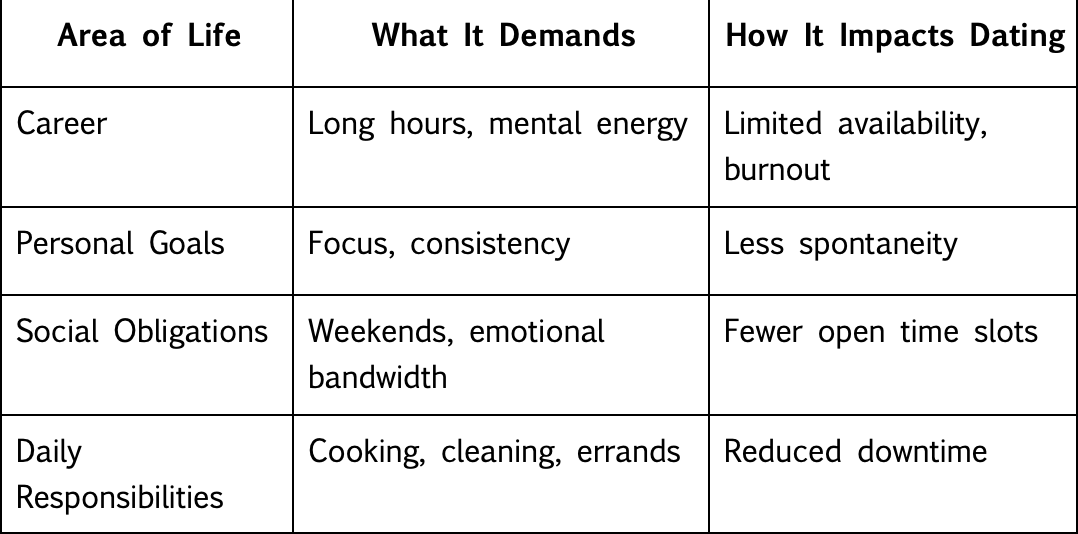
When every hour has a job, dating can feel like “one more task.” But relationships aren’t meant to feel like a chore. They thrive when integrated—not squeezed in resentfully.
Reframing the Problem: It’s Not About Time, It’s About Design
Instead of asking, “Where do I find more time?” try asking, “How can I design my week differently?”
Often, the issue isn’t a lack of hours. It’s fragmented attention.
Problem → Solution → Result
● Problem: Work and goals consume your prime energy.
● Solution: Protect small windows of high-quality, low-distraction time for connection.
● Result: Dating feels intentional instead of exhausting.
Even one well-planned evening a week can be more meaningful than five distracted interactions.
A Practical How-To: Creating Space Without Burnout
Use this checklist to audit your current routine:
Step 1: Review your calendar honestly. Circle time that’s flexible but currently wasted (scrolling, passive TV, unnecessary overtime).
Step 2: Block a recurring “connection window.” Choose one evening or weekend slot dedicated to dates, calls, or meeting new people.
Step 3: Simplify something else. Meal prep. Automate a bill. Say no to one optional commitment.
Step 4: Set realistic expectations. Aim for one or two meaningful interactions weekly—not daily messaging marathons.
Step 5: Protect your energy. Avoid overbooking back-to-back social events that leave you drained.
Consistency beats intensity. A sustainable rhythm keeps you open without overwhelm.
Small Shifts That Make a Big Difference
● Combine activities: Go for a walk or grab coffee instead of planning elaborate nights.
● Shorten first dates: A 60-minute meetup is enough to gauge interest.
● Use lunch breaks creatively if your schedule allows.
● Limit app time to specific windows instead of constant checking.
● Communicate your schedule honestly—clarity builds respect.
These micro-adjustments reduce pressure and help dating feel like a natural extension of your life.
Balancing Love and Long-Term Ambitions
For many adults, career growth and education are central priorities. Flexible learning options can make that balancing act easier. Adult learners often choose majors aligned with their goals—some, for example, pursue a business management bachelor’s degree to build leadership, operations, and strategic decision-making skills that support career advancement. Programs that offer adaptable online scheduling can make it more manageable to keep progressing professionally while still maintaining personal time. If advancing your education is part of your plan, exploring options like this may help you move forward without sidelining your relationships—this may help.
When your schedule supports your ambitions instead of competing with them, you’re less likely to view dating as a threat to your progress.
A Note on Emotional Bandwidth
Time is only half the equation. Emotional availability matters just as much.
If you’re constantly stressed, multitasking, or thinking about tomorrow’s deadlines, connection becomes shallow. Protecting even small pockets of calm—like a device-free dinner or an uninterrupted phone call—can deepen a relationship faster than frequent but distracted interactions.
Quality attention builds momentum.
Frequently Asked Questions
How often should I date if I’m busy? There’s no universal rule. Many people find one intentional date per week manageable and meaningful.
What if my work schedule changes constantly? Focus on flexibility. Instead of fixed days, set a weekly goal for one connection touchpoint.
Is it okay to tell someone I’m busy with career goals? Yes. Clear communication sets expectations and attracts people who respect your priorities.
What if I feel guilty taking time away from my goals? Relationships are part of a full life, not a distraction from it. Healthy connections can actually improve focus and resilience.
A Resource for Managing Time More Intentionally
If you struggle with structuring your week, time management expert Laura Vanderkam shares practical advice on designing your schedule around what matters most. Her TED Talk and books focus on reframing how we think about “not having enough time.” You can explore her work here: https://lauravanderkam.com/
Sometimes, seeing your hours differently is the first step toward opening space for connection.
Final Thoughts
Busy seasons are real, but waiting for life to slow down can mean waiting indefinitely. Dating doesn’t require endless free time—it requires intention. By making small adjustments, setting boundaries, and protecting your energy, you can stay open to meaningful connections while still honoring your ambitions. A full life and a fulfilling relationship don’t have to compete—they can grow side by side.