Instagram Has Become the New Rishta Auntie
This time of year has quietly become one of my favorites because, honestly, IPL season has completely taken over my evenings.
And I’m not even pretending to be casual about it anymore.
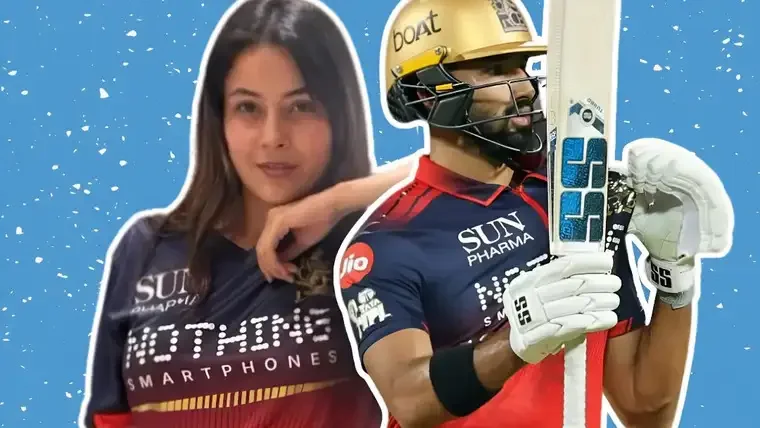
Image credit : Instagram | devpadikkal19 and Shehnaaz Gill | Internet Connects Shehnaaz Gill To RCB Cricketer Devdutt Padikkal After Viral Match Appearance
Between the dramatic finishes, the loyal fanbases, the endless memes, the celebrity sightings, and the emotional rollercoasters of every match, it genuinely feels more exciting than almost anything happening in U.S. sports right now. Every night there’s another storyline. Another rivalry. Another internet meltdown. Another reason for social media to spiral into detective mode.
And somewhere between checking scores, following teams, and inevitably ending up deep in Instagram comment sections, I realized something:
We are no longer using social media just to document relationships.
We are now using it to define them.
This week alone, the internet was buzzing over rumors surrounding Shehnaaz Gill and cricketer Devdutt Padikkal after fans began piecing together clues from IPL appearances, online interactions, and subtle digital breadcrumbs. Nobody publicly confirmed anything, yet entire relationship narratives were already being built online.
At the same time, speculation surrounding Mouni Roy and her husband intensified because fans noticed unfollows, deleted photos, and changes in social media behavior.
And honestly? That is modern dating in 2026. Relationships now begin through “soft launches” and end through archived photos. Instagram has quietly become the new Rishta Auntie.
From Biodatas to Digital Breadcrumbs
For decades, South Asian dating culture operated through community observation.
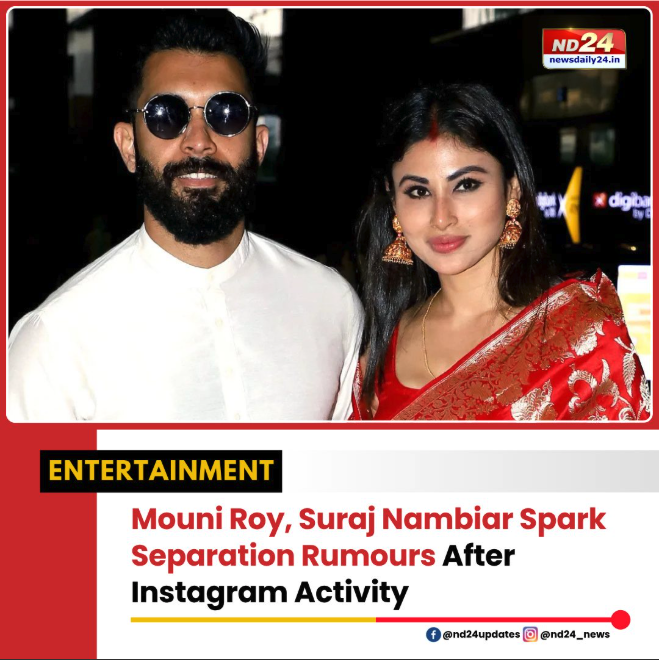
Image Credit: Instagram/nd24_news
Aunties noticed who sat next to whom at weddings. Families paid attention to who kept showing up together at events. Cousins spread gossip faster than breaking news. Entire relationship timelines were built from scattered clues and social patterns.
The only difference now is that technology has scaled the process.
Instead of aunties analyzing family reputations and wedding interactions, we now analyze:
story views
likes
follows
captions
emojis
playlists
tagged locations
who appeared in the background of someone’s Reel
The modern South Asian single has become part detective, part FBI analyst, and part emotional investigator. And the scary part is that many people genuinely believe these clues tell them everything they need to know.
Relationships Were Once Meant to Stay Hidden
But there’s another layer to this conversation that feels especially unique to South Asians.
For many previous generations, relationships before marriage were not always viewed as something joyful or worth celebrating publicly. In many households, dating was treated as something risky, shameful, distracting, or even threatening to the family’s reputation. Because of that, many South Asians learned very early how to hide their relationships.
Phones were checked. Questions were asked. Friend groups were monitored. Someone in the community always seemed to know somebody who knew somebody. And often, the attention surrounding relationships did not feel supportive or celebratory.
It felt investigative. That kind of pressure leaves a lasting impact.
Even now, many modern South Asian singles carry trauma from years of feeling like their relationships needed to stay hidden in order to survive. So while social media has created more freedom to share our lives publicly, many people still approach relationships with secrecy and caution.
That’s why “soft launches” have become so popular. People want to share their happiness. They want to feel seen. They want to post the dinner date, the concert, the cricket match, the matching coffee cups, the blurry hand across the table. But they also want control over who sees it. Not because they are ashamed of the relationship, but because many people are still trying to protect their peace from judgment, gossip, unsolicited opinions, or family pressure.
So modern daters have become incredibly creative.
They hide faces.
They crop photos.
They post close friends stories.
They archive pictures later.
They leave clues without confirmations.
It’s not just social media behavior. For many South Asians, it’s a coping mechanism that was built long before Instagram ever existed.
We’ve Replaced Communication with Observation
One of the biggest problems I see in modern dating is that people spend more time analyzing relationships than actually participating in them.
Instead of asking:
“How do you feel about me?”
people ask:
“Why did they watch my story but not reply?”
Instead of discussing exclusivity, people obsess over:
“Why did they suddenly stop liking my posts?”
Instead of expressing insecurity honestly, people spiral over:
“Why is that person always commenting under their photos?”
Instead of communicating disappointment directly, people post cryptic quotes hoping the other person notices. Instead of ending relationships clearly, people slowly disappear through delayed replies, muted stories, and passive online distance. And instead of focusing on how someone treats them in real life, many people now judge relationships almost entirely through digital behavior patterns. Instead of clarifying intentions, people monitor behavior patterns online. Instead of building emotional intimacy, people build digital familiarity. And those are not the same thing.
Someone watching every single one of your Instagram stories does not mean they are emotionally available. Someone liking your photos quickly does not mean they are serious about commitment. Someone posting you online does not automatically mean the relationship is healthy.
But social media creates the illusion of closeness because it gives us constant access to someone’s life. That illusion is addictive.
Dating Apps Have Quietly Become Instagram Funnels
And honestly, this behavior has completely changed the way people use dating apps too. One of the biggest trends I’ve noticed over the last few years is how many singles now include their Instagram handles directly in their dating app bios instead of actually filling out the prompts thoughtfully.
Rather than explaining:
who they are
what they value
what kind of relationship they want
what makes them compatible with someone
many people simply write:
“Follow me on IG.”
Why? Because people now believe their curated digital identity explains them better than words ever could.
Their Instagram becomes their personality. Their aesthetic becomes their dating profile. Their followers become social proof. Their highlights become emotional branding.
And while I understand the logic behind it, I actually think it’s making modern dating significantly worse. Because instead of creating intentional conversations, dating apps now often become passive social media extensions. People follow each other. Watch each other’s stories. React occasionally. Lurk quietly in the background for months… sometimes years.
And yet they never actually go on a date. Never have a meaningful conversation. Never clarify intentions. Never move the interaction forward. It creates this strange illusion of connection where two people technically “know” each other online without ever truly participating in each other’s lives.
The entire purpose of dating apps was supposed to be helping people meet intentionally. But somewhere along the way, many singles replaced intentional dating with passive digital observation. And honestly, I think a lot of people stay stuck in these pseudo-connections because lurking feels emotionally safer than rejection. Following someone requires very little vulnerability. Actually asking them out does.
The Rise of the “Soft Launch”
One of the funniest parts about modern dating culture is how everyone now understands terms like:
soft launch
hard launch
orbiting
breadcrumbing
lurking
ghosting
We’ve built an entire emotional vocabulary around social media behavior. And honestly, I understand why. Dating today feels vulnerable. Especially for South Asians.
Many singles are trying to balance:
cultural expectations
privacy
family opinions
fear of judgment
career ambitions
public image
dating exhaustion
So instead of openly defining relationships, people hint at them.
A blurry hand in a photo.
A dinner plate across the table.
An emoji over the person’s face.
A shadow in the background of a mirror selfie.
We are constantly signaling without fully revealing. Because ambiguity feels safer than vulnerability.
Digital Intimacy Is Not the Same as Real Intimacy
This is the part I wish more singles understood. You can know someone’s favorite music, coffee order, gym schedule, travel habits, and sense of humor entirely through social media…
…and still not actually know them emotionally.
Real intimacy still requires:
uncomfortable conversations
emotional honesty
vulnerability
consistency
conflict resolution
effort offline
No amount of Instagram interaction can replace that. And I worry that many singles are becoming emotionally attached to potential instead of reality because social media allows fantasy to survive much longer than it should.
The Most Secure Relationships Usually Look Boring Online
Ironically, the healthiest couples I know are often the least performative online. They are not constantly trying to convince the internet that they are happy. They are too busy actually building a life together.
That doesn’t mean posting your relationship is wrong. Not at all. But when a relationship becomes more about appearing connected than being connected, that’s when problems start. And honestly, I think that’s why stories like the Shehnaaz Gill rumors or the Mouni Roy speculation capture so much attention. Because deep down, everyone understands this language now.
We all know how to read the clues.
The likes.
The unfollows.
The disappearances.
The subtle appearances.
The soft launches.
The silent exits.
Modern relationships no longer unfold privately between two people. They unfold publicly, one Instagram story at a time.