
Dolly Parton’s Greatest Love Lesson: Your Relationship Doesn’t Have to Make Sense to Everyone Else
What Dolly Parton’s nearly 59-year marriage can teach South Asian singles about compatibility, privacy, individuality, and choosing a relationship that works in real life—not merely on paper.

Dolly Parton lived much of her life in public while protecting the deeply private relationship she shared with Carl Dean. Photo: RCA Records
When the news broke that Dolly Parton had passed away at 80, tributes seemed to appear everywhere at once.
People remembered the music, the rhinestones, the humor, the philanthropy and, of course, the unmistakable voice behind songs such as “Jolene,” “9 to 5,” and “I Will Always Love You.” But as I read through the reflections on her remarkable life, I found myself thinking about another part of Dolly’s story: her unusually private marriage to Carl Dean.
Dolly spent decades as one of the most recognizable women in the world. Carl wanted almost nothing to do with fame. She sparkled under stage lights; he preferred staying out of sight. She traveled, performed, built businesses and became an international icon, while he maintained a life that was largely separate from the public machinery surrounding her career.
On paper, they might not have appeared to be an obvious match. In real life, they were married for nearly 59 years.
Carl died in March 2025 at 82. Dolly followed on August 25, 2026, after what her representatives described as a brief battle with cancer. As we remember the extraordinary legacy she leaves behind, her marriage offers South Asian American singles a lesson that may be more important than ever:
A good relationship does not have to make sense to everyone watching it. It has to work for the two people living it.
Compatibility Is Not the Same as Sameness
South Asian singles are often given a very particular picture of compatibility. Similar family backgrounds. Similar education. Similar earning potential. The same religion, language, caste, dietary preferences or regional community. Comparable levels of social involvement. A shared timeline for marriage, homeownership and children.
Some of these considerations are meaningful. Marriage is not built on chemistry alone, and practical alignment matters. Shared values, respect for family, financial responsibility and compatible visions for the future deserve serious attention. But somewhere along the way, many singles begin treating similarity as proof of compatibility. It isn’t.
Two people can have nearly identical résumés and be terrible partners for each other. They can come from the same community and disagree on how much influence their families should have. They can share a religion but practice it very differently. They can both want children while holding completely different views about parenting, gender roles or household responsibilities. Meanwhile, two people with different personalities and lifestyles can create an extraordinarily stable partnership when they respect, support and understand one another.
Dolly and Carl were not living identical lives. What they appeared to have was something far more valuable: a shared understanding of how their differences could coexist. The goal of dating is not necessarily to find someone who mirrors you. It is to find someone whose way of living can peacefully and meaningfully fit alongside yours.
The Right Partner Does Not Have to Want Your Life

Compatibility does not require two people to have identical personalities, interests or ways of moving through the world. Photo: ChatGPT
Carl Dean reportedly had little interest in celebrity life. He did not need to become a public figure simply because his wife was one. That distinction matters. Sometimes singles unconsciously search for a partner who will adopt every aspect of their existing life. We expect the person we marry to attend every function, enjoy all our friends, participate in every hobby, become close with every cousin and share our exact level of enthusiasm for community involvement.
In South Asian families, this expectation can become even more pronounced. Marriage is rarely viewed as the joining of only two people. A spouse may be expected to enter an entire family ecosystem—and immediately perform their role within it.
But someone can respect what matters to you without wanting to participate in all of it exactly as you do. An introvert can support an extrovert without attending every party. A private person can love someone with a public career. Someone who values quiet weekends can be compatible with a partner who enjoys large family gatherings, provided they communicate and compromise.
Your partner does not need to want your exact life. They need to respect the life that matters to you—and you must be willing to respect theirs. That is the difference between compatibility and conformity.
Support May Look Quieter Than You Expect
In the age of Instagram, we have become accustomed to public evidence of private love. Anniversary tributes. Vacation photographs. Coordinated outfits. Elaborate proposals. Couples attending every event together. A steady stream of content designed to tell the world, “Look how happy we are.”
There is nothing wrong with celebrating a relationship publicly. But visibility should never be confused with intimacy. Carl was rarely photographed alongside Dolly, yet she spoke consistently about the stability and support he gave her. Their relationship did not need to become a performance for the public in order to be meaningful in private.
This is especially relevant for South Asian singles because our relationships can easily become communal property. Relatives want updates. Friends want details. Parents want to know where things are heading. WhatsApp groups dissect engagements, weddings and breakups. If a couple is not displaying affection or moving according to an expected timeline, others may assume something is wrong. But the strength of a relationship cannot always be measured from the outside.
A partner may not write long social media captions but will quietly care for you when you are sick. They may not enjoy posing for photographs but will listen when you have had a difficult day. They may not impress an entire room during the first family introduction but will consistently treat you with patience, loyalty and respect.
Do not overlook quiet devotion because you have been conditioned to look for public performance. Ask yourself: How does this person love me when no one else is watching?
Privacy Is Not the Same as Secrecy

Healthy relationships need community—but they also need privacy in which two people can communicate and make decisions together. Photo: ChatGPT
Dolly did not deny that she was married. She spoke lovingly about Carl, told stories about their relationship and acknowledged the important place he held in her life. But she also protected their marriage. That is different from secrecy.
Secrecy involves hiding information that a partner has a reasonable right to know or refusing to acknowledge a relationship. Privacy means recognizing that not every part of your relationship belongs to your parents, siblings, friends, followers or extended community.
This can be a difficult boundary for South Asian Americans to establish. Family involvement is a cherished part of our culture, and it can be a tremendous source of strength. Our elders may bring wisdom, perspective and a genuine desire to protect us. Marriage also has consequences beyond the couple, particularly when families will be closely connected. But family involvement should not require surrendering all privacy.
Your parents do not need a detailed report after every date. Your friends do not need screenshots of every disagreement. Your relatives do not get an automatic vote on each stage of your relationship. When too many people are invited into a couple’s private world, ordinary misunderstandings can become family conflicts. A disagreement that could have been resolved in a single conversation may instead become evidence collected and remembered by everyone who loves you.
Healthy relationships need trusted community. They also need a protected space in which two adults can learn to communicate, disagree, repair and make decisions together. Family can advise a relationship without managing it.
Marriage Should Not Require You to Disappear
Dolly Parton did not make herself smaller in order to remain married. She continued writing, performing, building businesses, wearing what she wanted and becoming more fully herself. Carl’s preference for privacy did not require Dolly to retreat from public life. Dolly’s ambition did not require Carl to transform himself into a celebrity spouse. That balance may be one of the most valuable aspects of their story.
Too many singles approach marriage with an unspoken expectation that someone will eventually have to disappear. A woman may be expected to scale back her ambitions, relocate without discussion or absorb the responsibility of maintaining both families. A man may feel pressured to become the sole provider even when that role does not suit the couple’s finances or values. One person’s career, family, city, religion or social preferences may automatically become the default.
Compromise is part of every marriage. Sacrifice is sometimes necessary. But sacrifice should not consistently flow in only one direction. A healthy partnership will change you, but it should not erase you. The right person will not agree with every choice you make. They will not necessarily participate in every dream. But they should be able to see your gifts without feeling threatened by them—and you should offer them the same freedom.
The question is not merely, “Will this person fit into my life?” It is also, “Can we create a life with enough room for both of us?”
A Marriage Without Children Is Still a Complete Marriage
Dolly and Carl did not have children during their nearly 59 years of marriage. Dolly spoke openly over the years about experiencing endometriosis and undergoing a partial hysterectomy, which meant that motherhood did not unfold for her in the way she may once have imagined. She eventually came to believe that her life had given her an opportunity to care for children on a much wider scale. She became a beloved aunt and godmother, most famously to Miley Cyrus. Through Dolly Parton’s Imagination Library, she also helped provide hundreds of millions of free books to children around the world.

Dolly Parton may not have had children of her own, but she created a far-reaching legacy of care through her Imagination Library, helping generations of children discover the joy of reading. Photo: Imagination Library
But there is an important distinction to make: Dolly did not need to become a maternal figure to millions of children to prove that her marriage was meaningful. Her relationship with Carl was not incomplete because they did not become parents. This is an especially important conversation within South Asian culture, where marriage and parenthood are often treated as though they are one continuous expectation. A couple gets married, and almost immediately, the questions begin:
“When are you having children?”
“Why are you waiting?”
“Don’t you want to give your parents grandchildren?”
Marriage can start to feel less like a relationship between two people and more like a waiting room for parenthood.
Children can bring extraordinary love and meaning into a family. Wanting to become a parent is a valid and important life goal. Whether two people want children is also one of the most significant compatibility conversations they should have before marriage. But children should not be treated as proof that a marriage is successful—or as the only reason for creating one.
Some couples choose not to have children. Some remain undecided. Some experience infertility or health complications. Some become stepparents, foster parents, adoptive parents, mentors, aunts, uncles or deeply involved members of their communities. Others build lives centered around partnership, service, creativity, travel or shared purpose. None of these paths makes a marriage less worthy of respect.
South Asian singles should absolutely discuss children honestly and early enough to make informed decisions. What they should not do is assume that every person wants the same version of family—or that someone’s life must follow a prescribed sequence to be considered complete.
The deeper question is not simply, “Will we have children?” It is: “What kind of family and life do we want to create together—and do we respect each other’s vision?”
Dolly and Carl’s marriage reminds us that the partnership itself matters. A spouse is not merely the person with whom you complete the next expected milestone. They are the person with whom you build the everyday substance of your life. A marriage without children is not missing its purpose. The love, loyalty, companionship and life two people share can be a purpose of its own.
Tradition Can Give Us Roots Without Becoming a Cage
Dolly and Carl’s marriage was both traditional and unconventional. They believed in commitment. They remained married for life. Their relationship offered loyalty, constancy and a place to return home to. At the same time, they did not appear overly concerned with making their marriage resemble anyone else’s. That balance is worth considering within the South Asian diaspora.
We do not have to discard tradition to create relationships that fit modern life. There is tremendous value in taking marriage seriously, involving trusted family members, honoring commitment and understanding that love is sustained through action—not merely emotion. But honoring tradition does not require copying one rigid marital model. South Asian Americans are building lives between cultures. Many of us are balancing family duty with individual choice, professional ambition with partnership, and communal identity with personal authenticity.
The answer is not to choose “American independence” over “South Asian tradition,” or vice versa. The goal is to thoughtfully decide which values deserve to be carried forward and which expectations no longer serve the relationship we are trying to build. Tradition should offer wisdom and roots. It should not become a cage that prevents two people from designing a healthy life together.
Are You Choosing Compatibility—or Choosing What Is Easy to Explain?
This is where Dolly and Carl’s story becomes a practical dating lesson. As a matchmaker, I often see singles place enormous weight on qualities that make a match easy to present to other people. The right career. The right height. The right degree. The right family name. The right community. The right collection of external markers. Those qualities can make a profile attractive. They cannot guarantee that the person will be emotionally available, respectful, reliable or capable of building a partnership.
Before rejecting someone who does not immediately resemble the spouse you pictured, ask yourself:
Does this difference affect our core values, or does it simply challenge my expectations?
Can this person respect the parts of my life they do not personally share?
Do I feel supported without feeling controlled?
Can we make decisions together, even when our families have opinions?
Is there room for both of us to remain individuals?
Am I concerned about our actual compatibility—or about how I will explain this person to other people?
You should not ignore genuine incompatibilities in the name of being open-minded. Differences involving children, finances, fidelity, faith, family boundaries or lifestyle goals can have serious consequences. But not every difference is a red flag. Sometimes the difference is precisely what allows the relationship to breathe.
[INSERT PHOTO 5: A South Asian American couple walking together with comfortable, natural body language]
The Love Story Only the Two of You Need to Understand
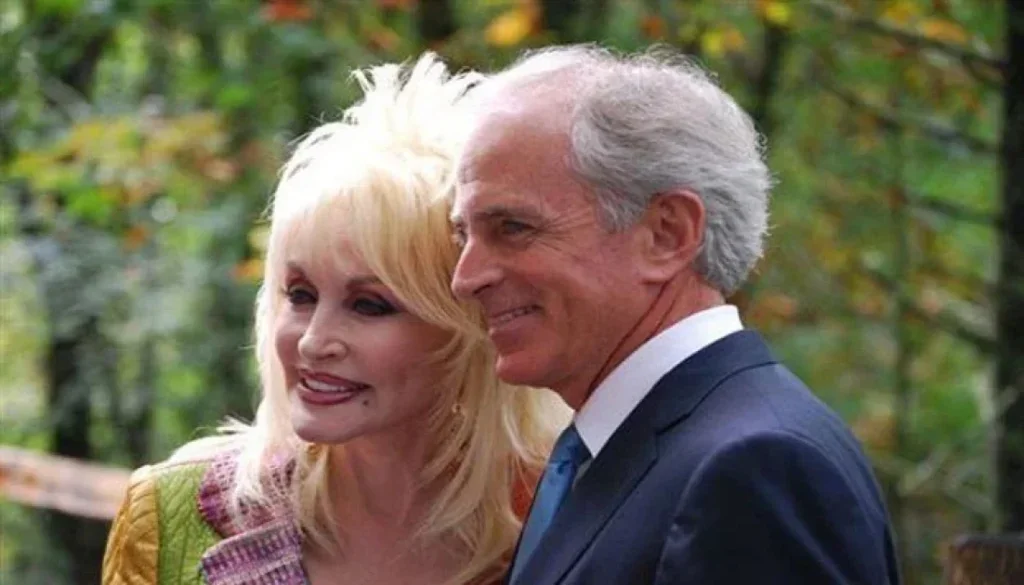
Dolly Parton and Carl Dean built a nearly 59-year marriage that made room for two very different people—a reminder that lasting love does not have to make sense to everyone else. Photo: https://matrixngr.com/
None of us can know everything that happened inside Dolly Parton and Carl Dean’s marriage. Celebrity relationships should not be romanticized as perfect simply because they lasted a long time. But we can pay attention to the principles Dolly publicly described: loyalty, humor, support, privacy and enough independence for two very different people to remain themselves.
Perhaps that is the love lesson she leaves South Asian singles: Do not build a relationship solely for the approval of an audience. Choose someone who respects where you come from without dictating who you must become. Choose someone who supports your calling, even if they do not share it. Choose someone with whom you can protect the private, ordinary parts of life.
Your parents may not immediately understand every choice. Your friends may not recognize the dynamic they would have selected for themselves. Your relationship may never look particularly impressive on Instagram. That is all right.
The strongest marriage may not be the one that appears perfectly matched from the outside. It may be the one in which two different people have quietly learned how to love, support and make room for each other over time. Because ultimately, your relationship does not have to make sense to everyone else.
It has to make a meaningful life for the two of you.