
The Biological Clock is real. but should it choose your spouse?
There are few phrases that create more anxiety in dating than “the biological clock.”
It is the kind of phrase people say casually, but for many women, especially women in their 30s, it lands like a countdown timer. It can make every first date feel more consequential, every breakup feel more devastating, and every uncertain relationship feel harder to leave.
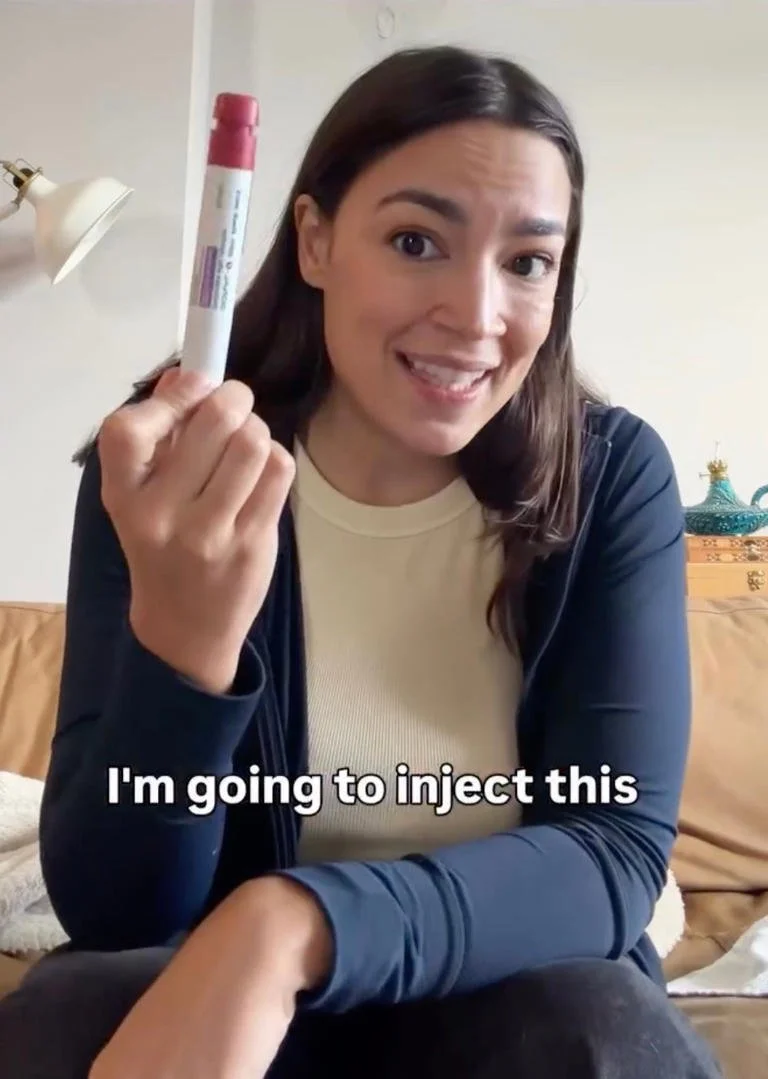
AOC went on Instagram this week to give her fans an inside look at the process she’s undergoing to have her eggs frozen — declaring herself a “badass.” Photo: Alexandria Ocasio-Cortez / Instagram
This week, that conversation moved into the public spotlight when Rep. Alexandria Ocasio-Cortez shared that she has begun the process of freezing her eggs. At 36, she spoke openly about wanting more control over her future and about the emotional, financial, and physical realities of fertility preservation. Around the same time, reports surfaced that she and her longtime partner, Riley Roberts, had quietly ended their engagement some time ago, though Ocasio-Cortez has not publicly confirmed the split.
And almost immediately, the internet did what the internet does.
People started asking: Wasn’t she engaged? Why is she freezing her eggs? Why doesn’t she just have a baby with him? Is she single? Is she planning for children alone? Is this about career? Is this about politics? Is this about the breakup?
But underneath all of that speculation is a much more human question, and one that comes up constantly in dating: What happens when your relationship timeline and your biological timeline stop cooperating? Because that is the part so many people understand, whether they are public figures or private people quietly trying to make sense of their own lives.
You can be accomplished, thoughtful, intentional, and deeply marriage-minded, and still find yourself staring at a life timeline that does not look the way you imagined it would.
Maybe you thought you would be married by 30.
Maybe you thought you would have your first child by 32.
Maybe you thought the person you were with was going to be the person.
Maybe you invested five years into a relationship, only to realize it was not right.
Maybe you are 35, newly single, and everyone around you is saying some version of, “You don’t have time to start over.”
That is the pressure I want to talk about. Not the politics. Not the gossip. Not whether a public figure owes us an explanation about her relationship. The real question is this: Your biological clock may be real. But should it get a vote in who you marry?
When the Timeline Becomes the Decision-Maker

Timing matters — but fear should not become the decision-maker. Photo: ChatGPT
For many South Asian singles, marriage is not treated as one life choice among many. It is treated as the life milestone that unlocks everything else.
Marriage first.
Then children.
Then family stability.
Then social approval.
Then everyone can finally stop asking questions at weddings, baby showers, pujas, Eid parties, Diwali parties, Thanksgiving dinners, and random family FaceTimes. That sequence is deeply familiar.
And to be fair, it exists for a reason. In many families, marriage is not just about romance. It is about building a stable home, joining families, creating continuity, and raising children within a shared cultural and emotional structure. There is wisdom in taking family seriously. There is wisdom in not treating children as an afterthought. There is wisdom in understanding that timing matters. But there is also danger when the timeline becomes louder than the relationship.
Because the moment you believe you are “running out of time,” you become more vulnerable to making fear-based decisions. You may stay in a relationship that does not feel right because leaving would mean starting over. You may ignore red flags because the person checks enough boxes on paper. You may rush commitment because your family is anxious. You may mistake consistency for compatibility. You may convince yourself that “no one is perfect” when what you really mean is, “I am scared I will not find someone else in time.”
That is where the biological clock can become dangerous. Not because fertility concerns are fake. They are very real. But because fear is not a good matchmaker.
The Sunk-Cost Problem in South Asian Dating
One of the hardest relationship traps is the sunk-cost fallacy. That is when you continue investing in something because you have already invested so much, even if deep down you know it is not working.
In dating, it sounds like:
“We have already been together for five years.”
“Our families already know each other.”
“We are already engaged.”
“We already booked venues.”
“I already moved cities for him.”
“I already told everyone about her.”
“I am already 34.”
“I do not want to explain another breakup.”
“I cannot start from scratch again.”
For South Asian singles, the sunk-cost problem can feel especially heavy because relationships do not always feel private. Once families are involved, the relationship can start to feel like a community project. There may be parents who are emotionally invested. Relatives who are asking questions. Friends who assume marriage is inevitable. A whole social circle that has already filed this person under “future spouse.”

A healthy marriage requires more than meeting the timeline. Photo: ChatGPT
So when the relationship starts to feel wrong, it is not just the breakup you are grieving. You are grieving the imagined future. You are grieving the timeline. You are grieving the relief you thought you were finally going to feel when everyone stopped asking when you were getting married.
And that is exactly when people start bargaining with themselves.
“Maybe this is good enough.”
“Maybe love grows after marriage.”
“Maybe I am being too picky.”
“Maybe every relationship is like this.”
“Maybe I should just move forward.”
Sometimes those questions are worth exploring. No relationship is perfect. Commitment does require maturity, compromise, and patience. But there is a difference between working through normal relationship challenges and trying to force yourself into a life that your body, heart, and instincts are resisting.
Starting over at 35 may be scary. Marrying the wrong person at 35 can be far more costly.
Fertility Planning Can Create Options, Not Guarantees
Part of what made AOC’s disclosure so culturally interesting is that egg freezing is still talked about in extremes. Some people treat it as a miracle solution. Others treat it as a sad backup plan. The reality is more nuanced.
Egg freezing is not a guarantee of a future child. It can be expensive, physically demanding, emotionally intense, and medically uncertain. It is not a magic pause button. But it can give some people a greater sense of agency. It can create options. It can make someone feel less trapped by the idea that every romantic decision must be made under emergency conditions. That distinction matters.
Fertility planning should not be marketed as “Now you never have to think about timing.” Timing still matters. But it can become one factor in your decision-making instead of the only factor.
For South Asian women especially, this conversation can be powerful because so much pressure gets collapsed into one terrifying sentence: “You do not have time.”
You do not have time to be picky.
You do not have time to heal.
You do not have time to leave.
You do not have time to date slowly.
You do not have time to want better.
You do not have time to start over.
And yes, biology is real. But fear-based urgency often makes people less discerning, not more prepared. The better question is not, “How do I ignore the clock?” The better question is, “How do I make responsible choices about my future without letting panic choose my partner?”
Marriage Should Be a Choice, Not a Deadline
There is a version of marriage-minded dating that is healthy, grounded, and intentional. It sounds like:
“I know I want marriage.”
“I know I want children.”
“I know family matters to me.”
“I know I do not want to date casually for years.”
“I know I need clarity earlier.”
That is not desperation. That is direction.
But there is another version of marriage-minded dating that is really anxiety wearing a lehenga. It sounds like:
“I have to make this work because I am too old to start over.”
“My parents are stressed, so I should just move forward.”
“He is good on paper, so maybe that is enough.”
“She checks the boxes, so why am I questioning it?”
“I cannot afford another failed relationship.”
“At this point, everyone has baggage.”
“I just need to get married.”
That is not clarity. That is panic. And panic is not the same thing as readiness.
Marriage should be entered with seriousness, not desperation. It should involve practical considerations, yes. Age, fertility, finances, family, and timing all matter. But none of those should override the most important question: Is this the person I can build a healthy life with?
Not just a wedding. Not just a family photo. Not just a socially acceptable timeline. A life.
Because the person you marry is not just the person who helps you meet a deadline. They are the person you will build routines with, raise children with if you choose to have them, handle conflict with, care for aging parents with, share money decisions with, and wake up next to on ordinary Tuesdays.
That decision deserves more than panic.
The South Asian “Just Get Married” Trap
One of the most painful things I hear from singles is some version of: “My family says I am overthinking it.” And sometimes, families mean well. They may be trying to reduce pressure. They may be reminding you that no relationship is perfect. They may be worried that endless searching will make it harder to commit. There can be truth in that. But “no one is perfect” should never be used to silence legitimate concerns.
If you are worried because someone communicates differently, that may be workable. If you are worried because your lifestyles need adjustment, that may be workable. If you are worried because your families have different expectations, that may be workable. But if you are worried because you do not feel emotionally safe, consistently respected, valued, or aligned on core life goals, that is not overthinking. That is information.
The “just get married” mindset can be especially harmful when it minimizes your lived experience inside the relationship. Your parents may see the biodata. Your relatives may see the family background. Your friends may see the Instagram photos. The community may see the engagement. But you are the one who experiences the relationship.
You know how the person treats you when no one is watching. You know whether difficult conversations become productive or punishing. You know whether your body relaxes around them or stays tense. You know whether you are choosing them freely or clinging to them because the alternative feels terrifying. That inner knowing matters.
Privacy Is Not Secrecy
There is another layer to this story that is worth naming. If the reports are accurate, AOC may have kept the end of her engagement private for a long time. And while public figures will always face more scrutiny, there is something relatable about not wanting to explain a breakup before you have even fully processed it yourself.
In South Asian communities, privacy can be difficult. People notice when someone disappears from photos. They ask when the wedding is. They ask why the engagement ended. They ask whether families fought. They ask who ended it. They ask what happened. And often, the person going through the heartbreak is expected to manage everyone else’s curiosity while also managing their own grief.
But not every life update needs to be public immediately. You are allowed to process before you explain. You are allowed to grieve before you give people a narrative. You are allowed to protect the details of a relationship that mattered to you. Privacy is not the same as secrecy. And just because people are curious does not mean they are entitled to the full story.
What Should South Asian Singles Actually Do?

The goal is clarity, not panic. Photo: ChatGPT
So let’s bring this back to dating in a practical way. If you are in your 30s and you want marriage, children, or both, you do not need empty reassurance. You need clarity. Here are five questions to ask yourself if you are feeling caught between the biological clock and the relationship clock.
First: Am I choosing this person, or am I choosing not to start over? Those are very different things. A good relationship should feel like a choice, not a hostage negotiation with time.
Second: If age were not a factor, would I still want this relationship? This question can be revealing. If the only thing keeping you in the relationship is fear of the dating market, that deserves attention.
Third: Do I feel more peaceful or more anxious when I imagine marrying this person? Nerves are normal. Doubts can be normal. But chronic dread, emotional heaviness, or a repeated sense that you are convincing yourself should not be ignored.
Fourth: Are my concerns about normal compromise or core incompatibility? Normal compromise is figuring out holidays, relocation, communication style, or family traditions. Core incompatibility is misalignment around children, values, respect, emotional safety, religion, lifestyle, or commitment.
Fifth: What options can I create so I am making decisions from wisdom rather than panic? For some people, that may mean fertility testing or speaking with a reproductive endocrinologist. For others, it may mean therapy, coaching, matchmaking, expanding criteria, or having a direct conversation with family about pressure.
The goal is not to control everything. The goal is to create enough clarity that fear does not become the decision-maker.
The Better Timeline
The reality is that many people’s lives do not unfold in the order they expected. Some people marry young and struggle. Some people marry later and thrive. Some people have children easily. Some people need medical support. Some people start over after a long relationship and meet the right person faster than they expected. Some people stay in the wrong relationship for years because leaving felt too scary.
There is no perfect timeline that guarantees happiness. But there is a better way to approach the timeline you are actually living. You can be honest about biology without letting it shame you. You can be intentional about marriage without rushing into the wrong one. You can respect your family’s concerns without letting their anxiety become your life plan. You can mourn the relationship that did not work while still believing your future is not over. You can create options without pretending options are guarantees. And you can start over without calling it failure.
The Takeaway

The right timeline is the one that leads you toward a life you can actually live in. Photo: ChatGPT
Your biological clock is real. Your desire for marriage is real. Your family’s hopes may be real. Your fear of starting over may be real. But none of those should choose your spouse for you.
The person you marry should not simply be the person who arrived before the deadline. They should be the person whose character, values, emotional maturity, and partnership make the future feel not just possible, but healthy.
Because marriage is not just about getting there on time. It is about choosing the right person to live with once you arrive.
So if you are standing at the crossroads of timing, fertility, family pressure, and relationship uncertainty, ask yourself one brave question: Am I moving forward because this relationship is right, or because starting over feels too scary?
That answer may not be easy. But it may be the clarity you need. And sometimes, clarity is the most loving timeline of all.