
Looksmaxxing Won’t Get You Married—And It Might Be Ruining Your Chances
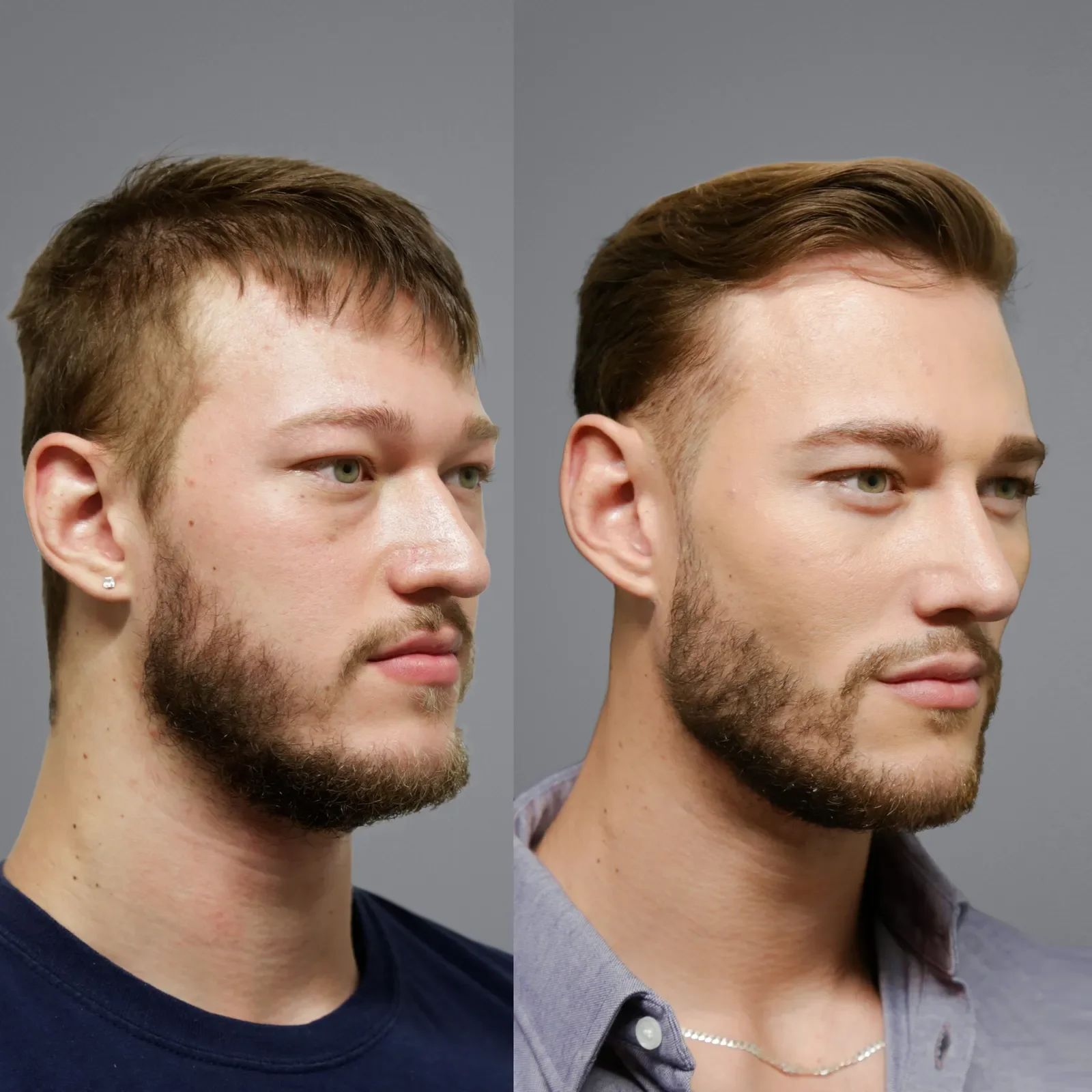
Before (left) and after a deep plane structural neck lift, infraorbital implants (below the eyes), transconjunctival lower blepharoplasty, microfat grafting, buccal fat reduction, and closed rhinoplasty. Courtesy of Ariel Rad, MD, PhD
The New Dating Strategy Men Are Talking About
If you’ve been anywhere near podcasts, TikTok, or Reddit lately, you’ve probably heard the term “looksmaxxing.”
At its core, looksmaxxing is the idea that you can—and should—optimize your physical appearance to increase your success with women. Better skin, a sharper jawline, a leaner body, a more curated aesthetic. In its more extreme forms, it can even include medical procedures or controversial techniques aimed at reshaping one’s face and physique.
Some influencers, like Clavicular, have taken this concept and turned it into a philosophy—one where attraction becomes something that can be engineered, measured, and perfected with enough effort and discipline.
And on the surface, it makes sense. Because in today’s dating world—especially on apps—your appearance does matter. First impressions are visual, and in a swipe-based culture, they often determine whether a conversation even begins.
But here’s the uncomfortable truth no one is telling you:
Looksmaxxing won’t get you married. And in many cases, it’s quietly ruining your chances.
Why Looksmaxxing Is So Appealing (Especially to Men)
To understand why this trend is gaining traction, you have to understand the experience of many men today—particularly South Asian men navigating dating in the U.S.
For years, you were told that success in life—and by extension, in relationships—would come from doing the “right” things. Focus on your education. Build a stable, respectable career. Be responsible. Be dependable. Be a good person.
But when it comes to dating, many men are finding that those qualities, while important, don’t automatically translate into attraction or romantic success. That disconnect creates confusion—and often frustration.
So when looksmaxxing enters the conversation, it offers something incredibly appealing: clarity.
It simplifies the problem into something tangible. If you’re not getting chosen, it must be because you don’t look good enough. And if that’s the case, then the solution is straightforward—improve your appearance, and your results will improve.
That sense of control is powerful. It gives you a plan. It gives you direction. It feels actionable in a way that emotional or social development often does not.
And to be clear—there is nothing wrong with wanting to improve how you look. Taking care of your health, grooming, and presentation is not only beneficial—it’s necessary.
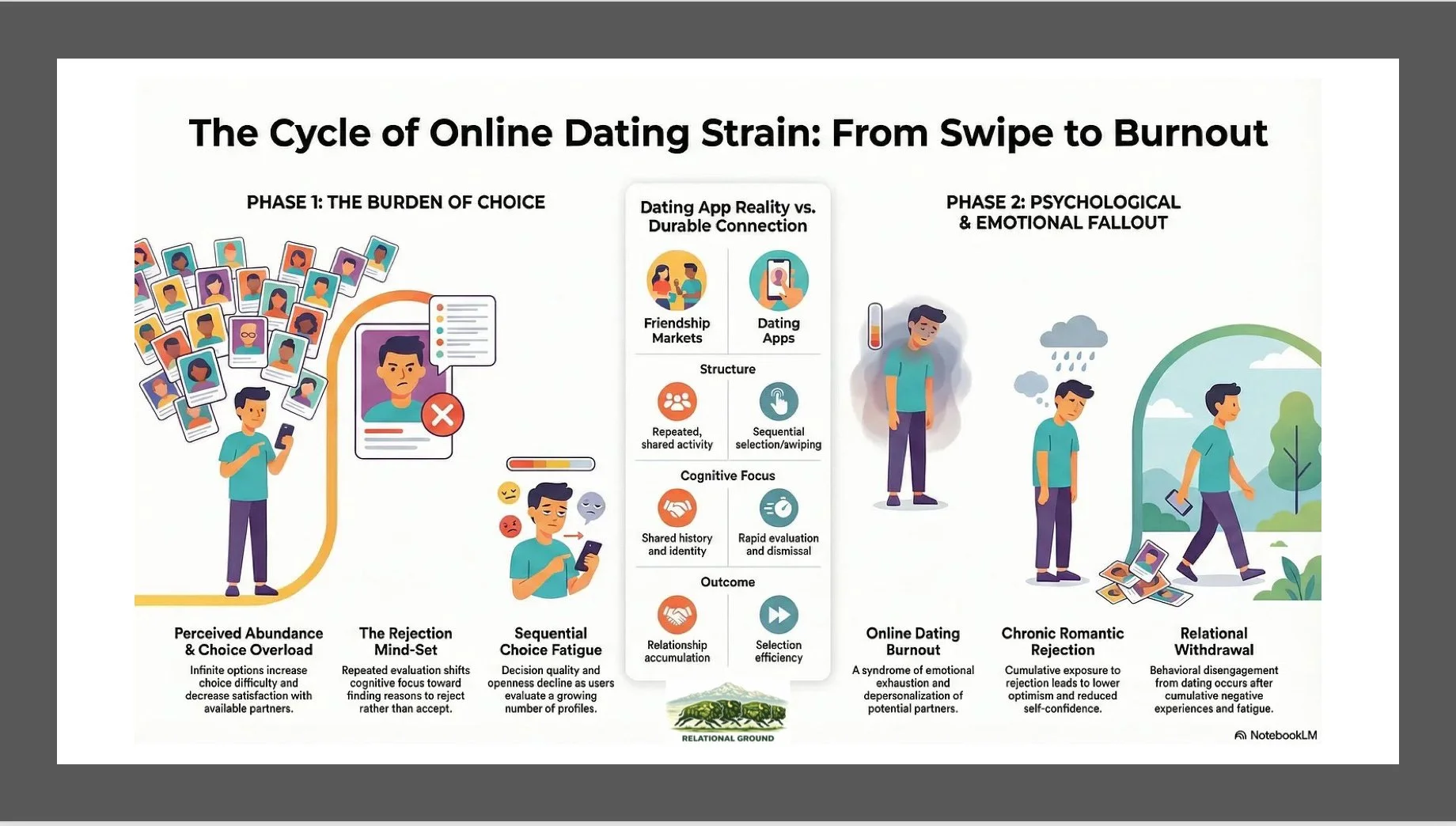
But looksmaxxing doesn’t stop at healthy self-improvement. It pushes you toward a mindset where your value becomes tied almost entirely to your appearance, and where dating begins to feel less like connection and more like competition.
The Dangerous Shift: From Self-Improvement to Obsession
There is a meaningful difference between taking pride in your appearance and becoming consumed by it.
Healthy self-improvement is grounded in respect for yourself. It enhances your confidence and supports your overall well-being. But obsession, on the other hand, comes from a place of insecurity—and it often leads to a constant feeling of not being “enough.”
Looksmaxxing blurs this line in subtle but significant ways. It encourages the belief that if you can just fix the right features—your skin, your body, your facial structure—everything else in your dating life will fall into place. It turns attraction into a puzzle that can be solved with the right combination of physical traits.
Over time, this can lead to a cycle where no amount of improvement feels sufficient. There is always another level to reach, another flaw to fix, another comparison to win. Instead of building confidence, it can actually deepen insecurity.
And more importantly, it shifts your focus away from the parts of attraction that truly sustain relationships—communication, emotional connection, and compatibility.
What Men Are Getting Wrong About Attraction
This is where I want to speak very directly, based on what I see every day as a matchmaker.
Yes, looks get you noticed. They create that initial spark of interest. But they are not what gets you chosen.
Long-term attraction is not built on perfection—it’s built on presence.
The men who consistently succeed in dating and relationships are not necessarily the most conventionally attractive. They are the ones who know how to make someone feel comfortable, seen, and understood. They are grounded in who they are, clear in their intentions, and capable of engaging in meaningful conversation.
In contrast, I often see men who have invested heavily in their appearance but struggle to build connection. They approach interactions with a performance mindset—focused on impressing rather than relating. They may be physically attractive, but emotionally distant or uncertain.
And that disconnect is felt immediately.
Attraction, especially for women who are dating with the intention of marriage, is not just about how you look—it’s about how you make them feel in your presence. That cannot be engineered through aesthetics alone.
The South Asian Reality No One Talks About
For South Asian men, this conversation carries an added layer of complexity.
You’re already balancing multiple expectations. There is pressure to succeed professionally, to meet family standards, and to eventually settle down in a way that reflects well on both you and your upbringing. These expectations are often unspoken, but deeply felt.
Now, on top of all of that, modern dating introduces a new layer of evaluation—one that is heavily visual and often influenced by Western beauty standards and social media culture.
The result is a sense that you must excel in every category: career, character, and now, appearance.
But here’s what often gets overlooked.
Many South Asian men were not raised in environments that emphasized emotional expression, dating skills, or interpersonal communication in a romantic context. Relationships were either guided by family or developed within more structured environments.
In today’s dating landscape, those structures are gone. You are expected to navigate attraction, connection, and communication independently.
And instead of being taught those skills, many are turning to looksmaxxing as a substitute—believing that improving their appearance will compensate for everything else.
But it doesn’t.
What Actually Works (From a Matchmaker’s Perspective)
Let me bring this back to what actually happens in real matchmaking scenarios.
When I present a match to a client, photos absolutely play a role. They create that initial moment of interest. But they are only one part of a much larger picture.
What consistently leads to mutual matches is not just attractiveness—it’s how someone comes across as a person.
Profiles that perform well feel intentional. They reflect clarity in what someone is looking for. They convey warmth, stability, and a sense of self-awareness.
And once a conversation begins, everything shifts.
The deciding factor becomes how you engage. Are you present in the conversation, or are you trying to perform? Do you ask thoughtful questions, or are you focused on saying the “right” thing? Do you create a sense of ease, or does the interaction feel transactional?
These are the moments where connection is either built or lost.
And none of that is determined by your jawline.
The Better Strategy: Presence Over Perfection
If you’re serious about improving your dating life, the goal should not be perfection—it should be presence.
Taking care of your appearance is important, and it should not be neglected. Being well-groomed, physically active, and intentional about how you present yourself does make a difference. It signals self-respect and effort.
But beyond that, the real work begins internally.
Developing the ability to communicate effectively, to understand your own values, and to approach dating with clarity and intention will take you much further than any physical transformation ever could.
Confidence that comes from self-awareness is far more attractive than confidence that is dependent on external validation.
Because when you are grounded in who you are, you are able to show up consistently—and that consistency is what builds trust and attraction over time.
Final Thought: Attraction Opens the Door—Character Gets You Chosen
Looksmaxxing offers a sense of control in a space that often feels uncertain.
It promises that if you optimize enough, you can guarantee results.
But relationships don’t operate on guarantees. They are built on connection, compatibility, and emotional alignment—things that cannot be measured or manufactured through appearance alone.
You’re not trying to win a competition.
You’re trying to build a partnership.
And that requires more than just looking good—it requires being someone another person can genuinely build a life with.
So yes, invest in your appearance.
But don’t confuse that with what actually makes someone stay.
Because in the end:
Attraction may open the door.
But character is what gets you chosen.