The One Who Loves Always Wins: What Ethan Hawke (and Unrequited Love) Can Teach Us About Modern Dating
For those of you who weren’t too invested in the Super Bowl this year, perhaps the Oscars are what you consider the ultimate crowning achievement in competition. Not sports—but storytelling. Art. Emotion.
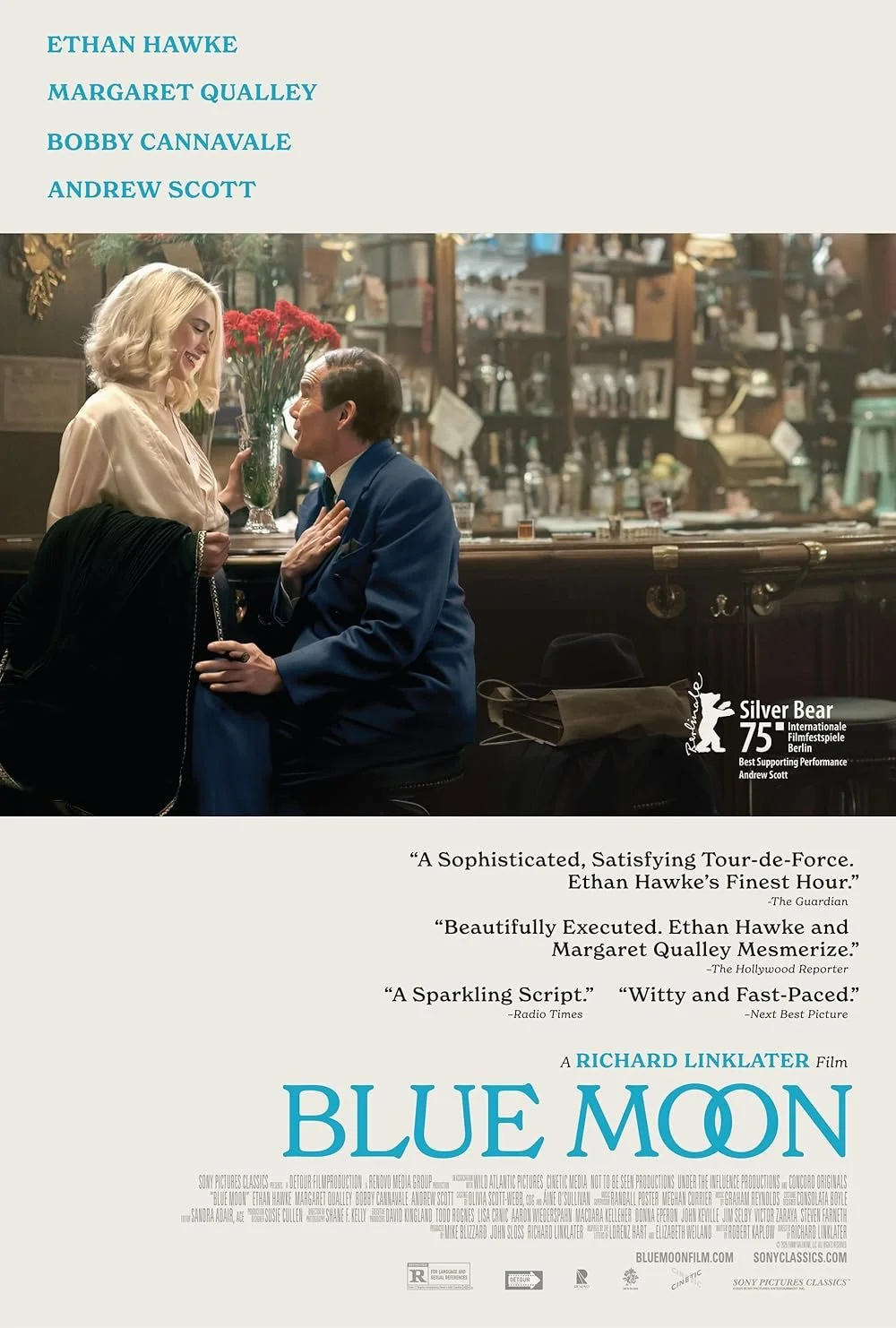
Ethan Hawke and Margaret Qualley in Blue Moon (2025) - Official Movie Poster
I’ll admit, I’ve always loved the Oscars. The pageantry, the fashion, the celebration of talent. But what I look forward to most each year are the moments—those unexpected, unscripted reflections that remind us what it means to be human.
And this year, one such moment came from Ethan Hawke.
Fresh off his Best Actor nomination for Blue Moon, Hawke was on the red carpet reflecting on a role that is quietly devastating and deeply human. In the film, he plays Lorenz “Larry” Hart—a brilliant, aging lyricist navigating loneliness, identity, and a yearning for connection that never quite lands where he hopes it will.
Hart becomes emotionally invested in a much younger woman, Elizabeth, seeing in her the possibility of something real—something grounding. But what he experiences instead is one of the most painful realities in dating. She cares for him, but not in the way he wants. There’s no betrayal and no dramatic fallout—just a quiet, undeniable truth that his love is not returned.
And there’s a moment in the film that captures this perfectly.
Hart listens as Elizabeth opens up—not about him, but about another man she loves. You can almost feel the shift in his body. There is no anger and no resentment—just quiet heartbreak. That moment is unrequited love in its purest form.
The Advice That Stopped Me in My Tracks
While discussing this role, a reporter asked Hawke what advice he would give to people going through something similar. His response was simple, but profound: “The one who’s in love always wins. It doesn’t matter if you get your heart broken—you’re living. You’re alive. The sun doesn’t care whether the grass appreciates its rays… it just keeps on shining.”
Let’s sit with that for a moment. Because in today’s dating culture—especially for South Asian singles navigating love in the diaspora—that perspective feels almost radical.
Unrequited Love Isn’t Failure—It’s Evidence That You Showed Up Fully
In Blue Moon, Hart doesn’t fail because he loved—he suffers because he hoped. He allowed himself to feel deeply, to invest emotionally, and to believe that what he was experiencing might lead to something real. That willingness to lean into love, even without guarantees, is what makes his story so human.
And in many ways, that’s exactly what makes unrequited love so painful, but also so meaningful. It reflects a version of you that was open, expressive, and courageous enough to care without certainty. The pain isn’t just about the outcome—it’s about the depth of what you were willing to give.
Because the alternative is far less fulfilling. Numbness. Detachment. Playing it safe. Holding back just enough so you never have to feel the sting of rejection. But that’s not how love has ever been built in our culture. Love has always required risk, vulnerability, and the courage to show up fully—even when the ending isn’t guaranteed.
The Modern “Friend Zone”: Where Intention and Reality Don’t Align
Now let’s bring this closer to home. Today, we often repackage unrequited love into a more casual term: the friend zone. You’ve seen it. You’ve experienced it. You may even be in it right now.
It often looks like daily texting, emotional support, and consistent presence. You are showing up, investing, and building something that feels meaningful. But when it comes time to define the relationship, you hear: “I don’t see you that way.”
Here’s where I want to gently challenge something. In my opinion, the “friend zone” is rarely about someone being unfair—it’s about unclear positioning over time. Especially in South Asian dating culture, where we are taught to be polite, patient, and accommodating, many of us fall into the trap of hoping feelings will grow, avoiding direct conversations, and confusing emotional closeness with romantic intention. And before we know it, we’ve built a connection—just not the one we were hoping for.
What Ethan Hawke Got Right (and What You Still Need to Do Differently)
Ethan’s advice is powerful, and I agree with the spirit of it. Yes, the one who loves does win, because they experienced something real. But this is where I want to guide you with intention—you are not meant to stay in spaces where your love is not being chosen.
There is a difference between being proud of your ability to love and remaining attached to someone who cannot meet you there. The sun keeps shining, but it also doesn’t stay fixed on one patch of grass forever.
Navigating Unrequited Love with Grace and Clarity
If you find yourself in this situation, the first step is to acknowledge the reality—not the potential. Don’t fall in love with what could be. Ground yourself in what is. If they’ve told you they don’t feel the same way, believe them.
At the same time, stop performing love in hopes of earning it. Love is not a reward system. Being more available, more supportive, or more “perfect” will not change someone’s emotional capacity.
It’s also important to reclaim your emotional energy. Every text, every call, every moment of mental space you give to the wrong person is energy that could be invested in someone who will choose you.
From there, set a boundary—even if it’s internal. You don’t always need a dramatic exit, but you do need a shift. Less access, less availability, and more self-respect.
And finally, keep your heart open—but not fixed. This is where Ethan’s message truly shines. Don’t let one experience harden you. Continue to love, continue to feel, and continue to show up—but do so with discernment, not desperation.
“The one who’s in love always wins. It doesn’t matter if you get your heart broken—you’re living, you’re alive. The sun doesn’t care whether the grass appreciates its rays… it just keeps on shining.”
Love Is Not Measured by Outcome
In our community, love is often tied to results—shaadi, family approval, long-term compatibility. But before all of that, love is simply the ability to feel deeply and offer that feeling to another human being. That, in itself, is not a loss.
So if you’ve ever been the one who cared more, who showed up first, or who felt more deeply, take Ethan Hawke’s words with you. You didn’t lose. You lived. You felt. You loved.
And now, you move forward—wiser, clearer, and ready for a love that meets you halfway.
If you want to elevate this even more, my recommendation would be to add one short client story right before the actionable section—that will take this from great to unforgettable.