
Gleeden, Gray Divorce & What South Asian Singles Must Know About Marriage Compatibility
Recently, an extramarital dating app called Gleeden made headlines in India for crossing over 4 million users—driven in large part by a 148% surge in female users over the past two years.
At first glance, it’s easy to react with shock.
But if you sit with it a little longer—as I have, both professionally and personally—you begin to see something deeper unfolding.
Because this isn’t just something happening “over there” in India.
I’ve seen versions of this play out across the diaspora.
I’ve had conversations with individuals in India who are in mutually understood open marriages—where both partners are seeking connection outside the relationship but staying together for family structure. I’ve seen situations here in the U.S. where not only did both spouses know about each other’s affairs… but even the parents and in-laws were aware, quietly maintaining the illusion of a functioning family.
And perhaps most telling of all, I’m seeing this pattern show up more and more in my Second-Time Shaadi clients—men and women in their 40s and 50s who were married young in traditional, often arranged setups, and are now choosing to leave those marriages in search of something deeper, more aligned, and more fulfilling in their next chapter.
So what we’re witnessing isn’t just a rise in infidelity. It’s a reckoning.
The Quiet Reality Behind the Headlines
The rise of platforms like Gleeden is not happening in isolation. It’s emerging alongside a broader shift in how marriage is experienced in India today.
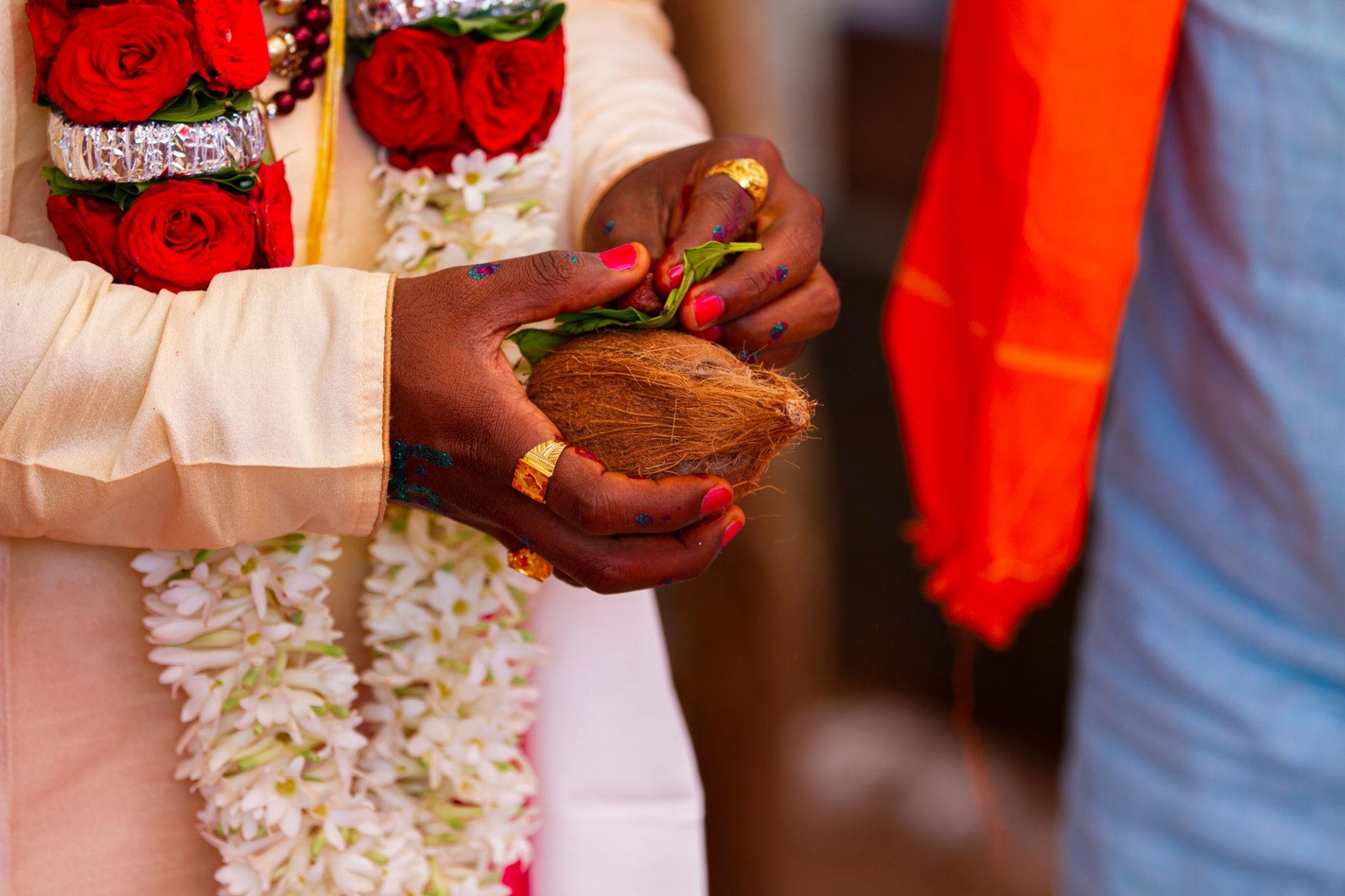
In many South Asian households, marriage has historically followed a predictable formula: get married at the “right” age, choose someone who fits family expectations, and prioritize stability over emotional connection. For decades, this system worked—because expectations were aligned. Marriage wasn’t about fulfillment. It was about duty.
But today, that expectation has changed.
As individuals—especially women—experience greater independence, education, and exposure, they are no longer willing to ignore emotional and physical needs within a relationship. What was once suppressed is now being expressed… just not always within the marriage itself.
The Rise of Gray Divorce—and What It Really Means
One of the most important concepts to understand in this conversation is the rise of gray divorce—couples separating later in life, typically in their 40s, 50s, or beyond.
In the Indian context, this trend carries an added layer of complexity. Many of these marriages were formed early—often in the mid-20s—through arranged setups that prioritized family alignment, cultural compatibility, and long-term stability. At that stage of life, individuals are still evolving. Their identities, ambitions, emotional needs, and even worldviews are still being shaped.
For a time, the structure of marriage—and the responsibilities that come with it—can sustain the relationship. Careers are built, children are raised, and families are maintained.
But when those external anchors begin to loosen, something shifts.
When children grow older and become independent, couples are often left facing each other without the buffer of shared responsibilities. And in many cases, they realize they are no longer aligned—not emotionally, not intellectually, and sometimes not even socially.
This is exactly what I am seeing in my Second-Time Shaadi clients.
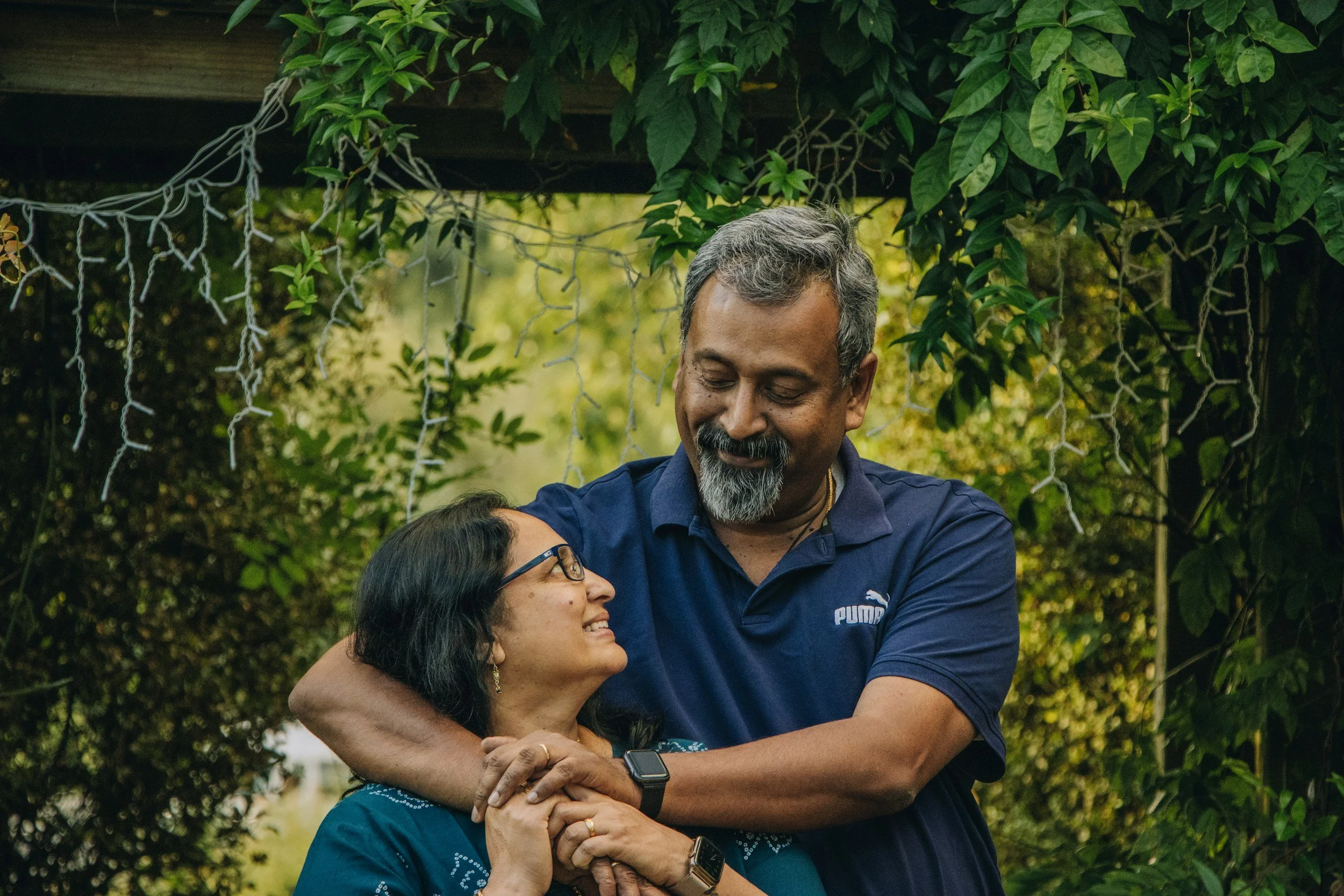
Many of them entered marriages that made perfect sense on paper at the time—aligned families, similar backgrounds, shared values. But decades later, they find themselves craving something deeper: companionship, emotional intimacy, shared interests, and a sense of being truly understood.
What’s particularly telling is that these individuals are not leaving because of one major conflict. They are leaving because of a slow, quiet realization—that the life they built together no longer reflects who they have become. And in cultures where divorce is still stigmatized, this realization doesn’t always lead to immediate separation. Instead, it often leads to emotional distance, parallel lives, or in some cases, seeking connection outside the marriage.
Gray divorce, then, is not just about endings. It is about what was never fully built to begin with.
What This Means for South Asian Singles Today
This is where I want every single person—especially those seriously dating for marriage—to pause and reflect.
Because the real takeaway here isn’t about extramarital apps.
It’s about the decisions being made before marriage that quietly shape what happens after.
Too often, I see singles approaching marriage like a checklist exercise—prioritizing shared religion, family background, education, and lifestyle compatibility on paper. And while these factors matter, they are not what sustain a relationship over decades. What I’m increasingly seeing—through both these global trends and my own client base—is that when emotional connection, intellectual alignment, and genuine companionship are missing, the relationship may survive structurally, but it begins to erode relationally.
And that erosion doesn’t always show up immediately. It shows up 10, 15, sometimes 20 years later.
There is also a longstanding tendency in our culture to downplay attraction and chemistry, as though they are optional or even superficial. But what we are now witnessing is the long-term consequence of that mindset. You can deeply respect someone, build a life with them, even raise a family together—and still feel profoundly alone in their presence. That emotional gap doesn’t simply disappear with time; it often widens, especially as life slows down and children grow older.
Another important shift to acknowledge is that marriage itself is being redefined. Previous generations often approached marriage as a structure rooted in duty, stability, and family continuity. Today, individuals—particularly those who have experienced independence, education, and global exposure—are seeking something more: emotional safety, partnership, friendship, and fulfillment. And when those needs are not met within the marriage, they don’t simply vanish. They find expression elsewhere—whether through emotional affairs, digital platforms, or ultimately, divorce.
What concerns me most, however, is how many couples enter marriage without having the conversations that truly matter. Topics like emotional needs, physical compatibility, communication styles, and long-term life vision are often overlooked in favor of surface-level compatibility. But these are precisely the areas that determine whether a marriage will feel fulfilling—or suffocating—over time. Avoiding these conversations early doesn’t eliminate the issues; it simply delays them until the stakes are much higher.
A Matchmaker’s Perspective
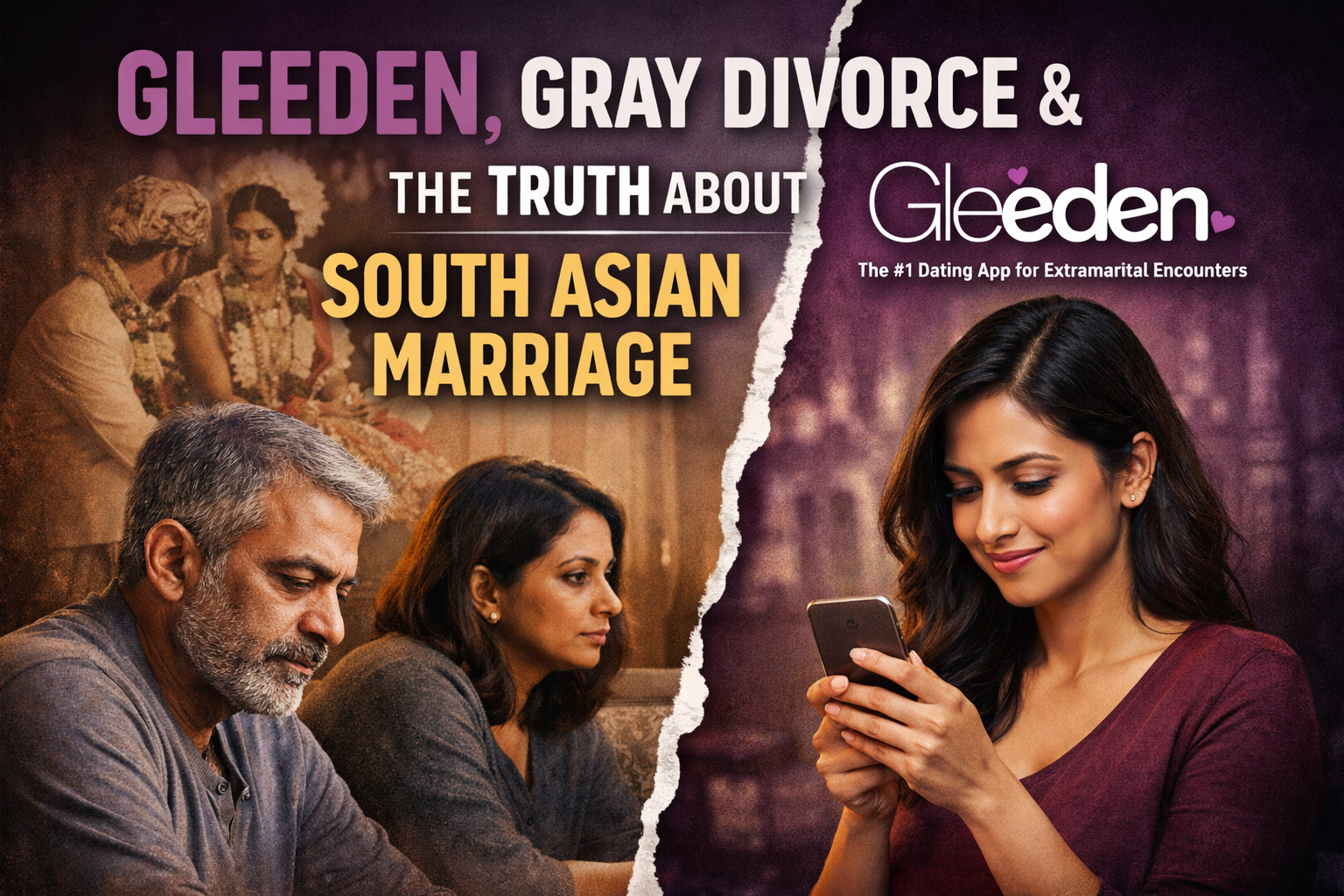
In my opinion, what we’re seeing right now—whether it’s the rise of Gleeden or the increase in gray divorces—is not a breakdown of values. It’s an evolution of expectations.
For generations, South Asian marriages were built to endure. Now, people are asking for them to fulfill.
And when a system designed for endurance is expected to deliver fulfillment without adaptation… something has to give.
The Question Every Single Needs to Ask
Before you say yes to a marriage, ask yourself: “Am I choosing this person because they make sense… or because they truly feel right?”
Because what you compromise on in the beginning… often becomes what you confront later. The goal isn’t just to get married. It’s to build a marriage you don’t need to escape from.